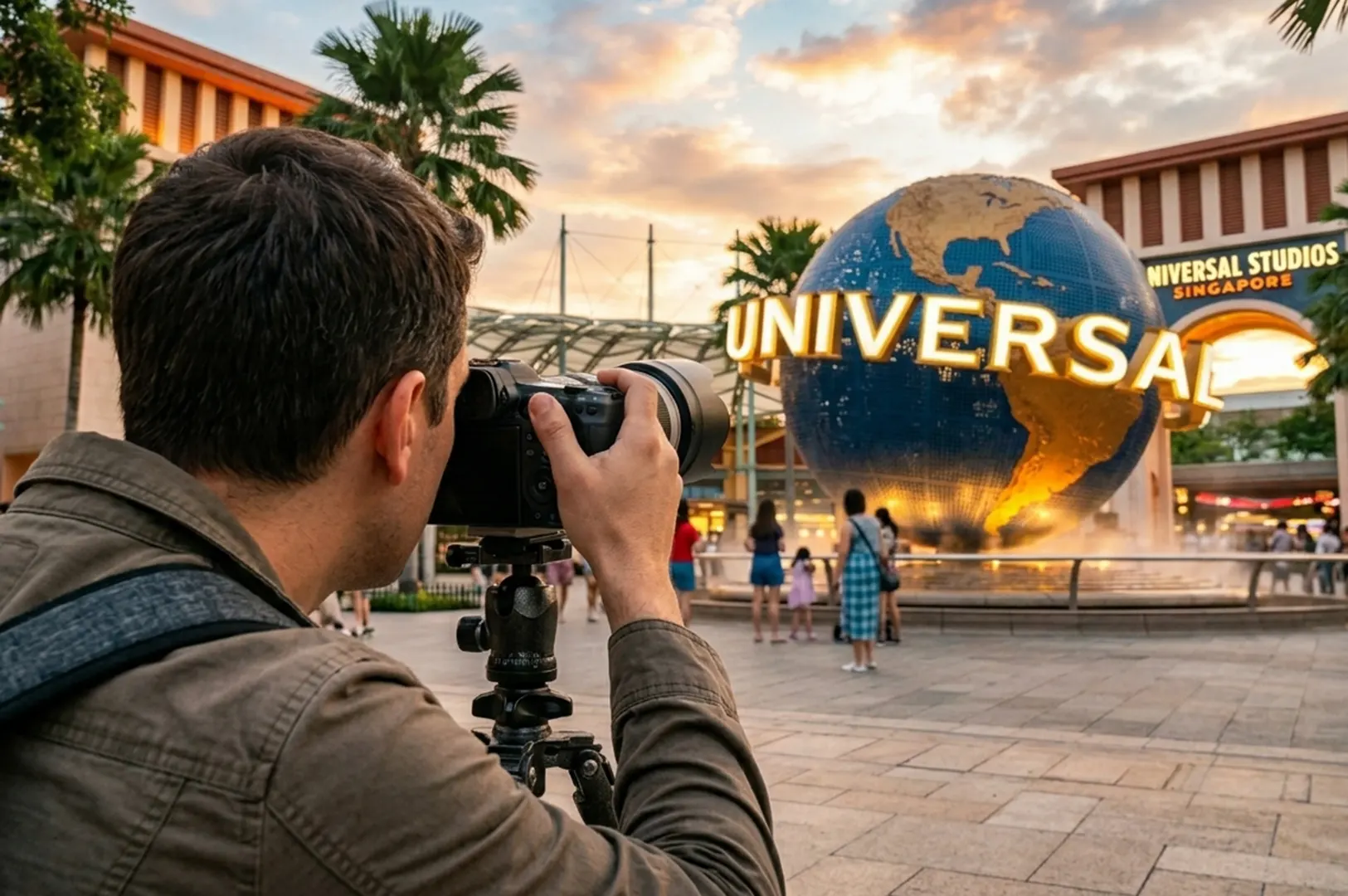
I went to Universal Studios Singapore looking for the wrong thing, and the day quietly corrected me. I came thinking I would photograph the spectacle—the towering rides, the bright facades, the manufactured skylines. But by mid-morning, I had stopped pointing my camera at the obvious. It was everything around the main attractions that began to ask for attention.
The first thing I noticed was the waiting. People wait far more than they ride. I saw a family in a queue beneath a strip of shade, the father holding drinks, the mother adjusting a child’s hat out of habit. The child wasn’t looking at the ride ahead; he was watching a pigeon peck at a dropped chip. The wonder the park promised was happening somewhere else entirely, smaller and unscripted. This is what I keep returning to: the image rarely lives where the money was spent.
Heat changes how a place looks. By noon, the harsh, flat light told the truth about a theme park afternoon. It showed the sweat at the temple, the damp shirt clinging to a back, the slow shuffle of feet that have walked further than they expected. I have learned not to wait only for golden hour. Sometimes the harsh light is the honest one.
Up close, the fantasy ages. A character suit shows its seams. A foam crown sits slightly crooked. None of this ruins the illusion; it deepens it. There is something tender about a manufactured wonder that is trying so hard, held together by paint and staff and the willingness of everyone to believe. The camera doesn’t mock these things; it simply notices they are made.
I found myself drawn to the spaces between excitement: the pause right after a ride, when people stumble off laughing but slightly hollow; the bench where an older couple watched their grandchildren from a distance they had earned; the teenager checking her phone in a doorway, entirely somewhere else. These are the moments the park does not advertise. They are the ones I wanted to keep.
By late afternoon, fatigue had become its own subject. A toddler asleep against a shoulder, a father carrying a stuffed animal that wasn’t his. The slow walk toward the exit, full of the particular tiredness that only a good day produces.
I left without the grand images of the spectacle I had expected to take. Instead, I came away with the hat being adjusted, the reflection in the glass, the sleeping child. Maybe that is what the camera is for: not to confirm the wonder we were sold, but to find the human moments hiding inside it. Maybe the attractions were never the point. Maybe they were only the reason for people to gather in one place, long enough for me to see them being beautifully, ordinarily themselves.