
Some mornings ask nothing of you except that you pay attention.
There is a particular hour in Singapore, just before the heat arrives, when the city is still deciding whether to wake. The sky is not blue yet; it is the colour of weak tea. I come to the hawker centre then, not for a specific photograph, but because the photograph usually arrives on its own if I am patient enough to wait.
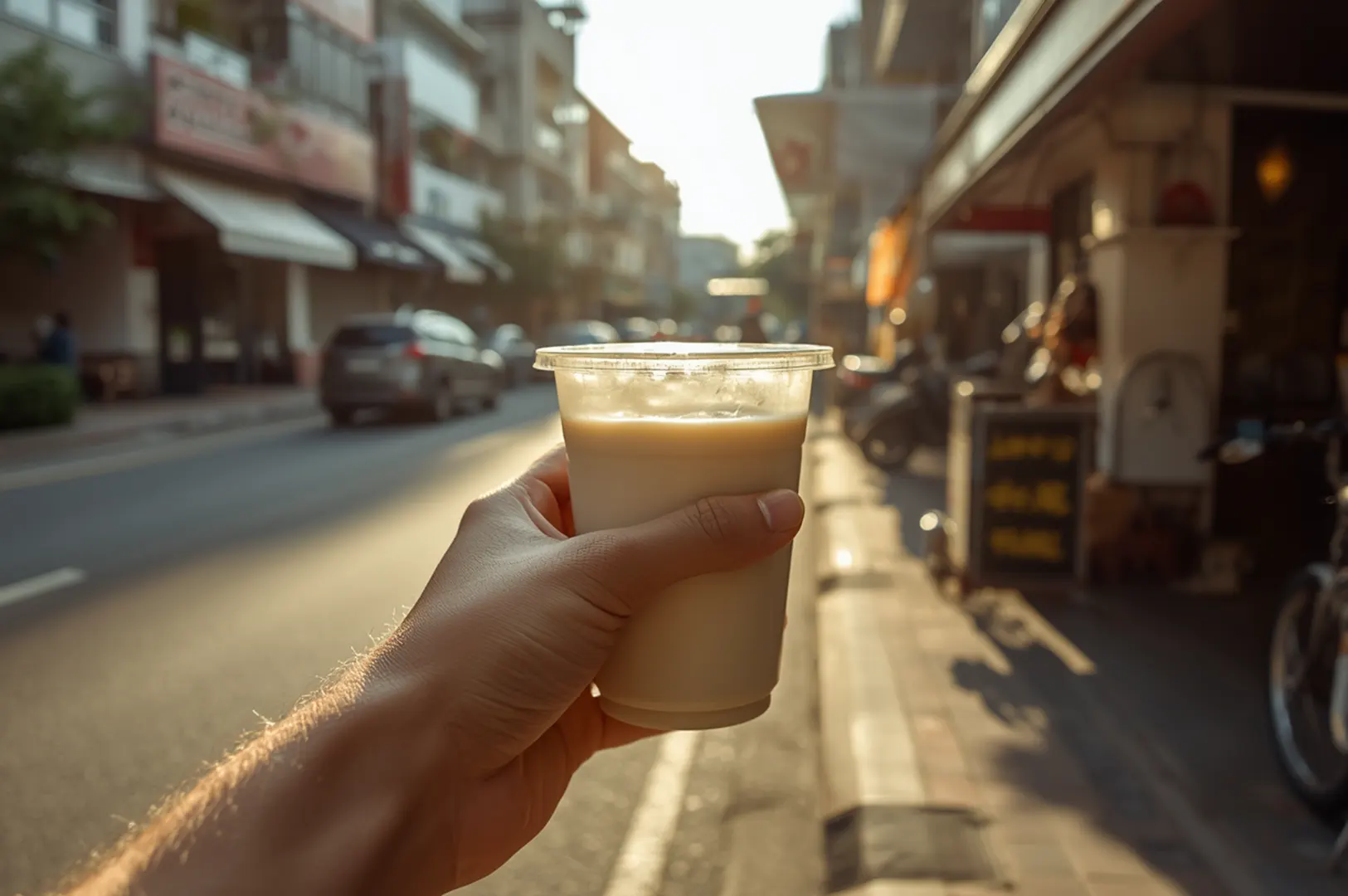
The soy milk comes first. A plastic cup, warm against the palm, sweating in the humidity. The condensation gathers and slides, catching the first light slipping between the shophouse blocks. I have photographed that cup more times than I can count because it holds the morning inside it: the steam, the waiting, the small comfort of a routine.
A photograph rarely begins with the camera. It begins earlier, in the noticing.
The metal shutters go up in stages around me, a familiar song. Half-open, they throw long horizontal shadows across the floor. The first uncle to arrive walks through them, the bars of light and dark sliding over his shoulders. He does not know he is part of a picture. I think the most honest images are the ones that do not perform.
Light here is not dramatic. It is gentle, almost shy, raking across worn tabletops and finding the chipped enamel of an old plate. I have found that if you wait long enough in one place, the light comes to you. Your only task is to be sitting where it lands. The smell of fried dough drifts over. A radio murmurs in a half-understood dialect. These are not things a camera can hold, yet they shape every frame I make here.
I think this is what people miss when they ask what gear I use. The question assumes the image lives in the machine. But the image lives in the morning, in the memory it stirs. The camera is only the instrument that agrees to remember on my behalf.
I photograph the shadows more than the faces. A shadow keeps a person’s privacy while telling their story—the long shape of someone reaching for a cup, the dark pooled beneath a stool. And then, slowly, the city arrives. The traffic thickens, the light loses its kindness, and the morning becomes ordinary again.
I do not always come away with a photograph. Some mornings I come away with only the morning itself, which is enough. Maybe that is all a photograph ever really is: a small argument against forgetting. And maybe the soy milk, the shadows, the slow light across a worn table, were never the subject at all. Maybe they were only the reason I learned to look.