
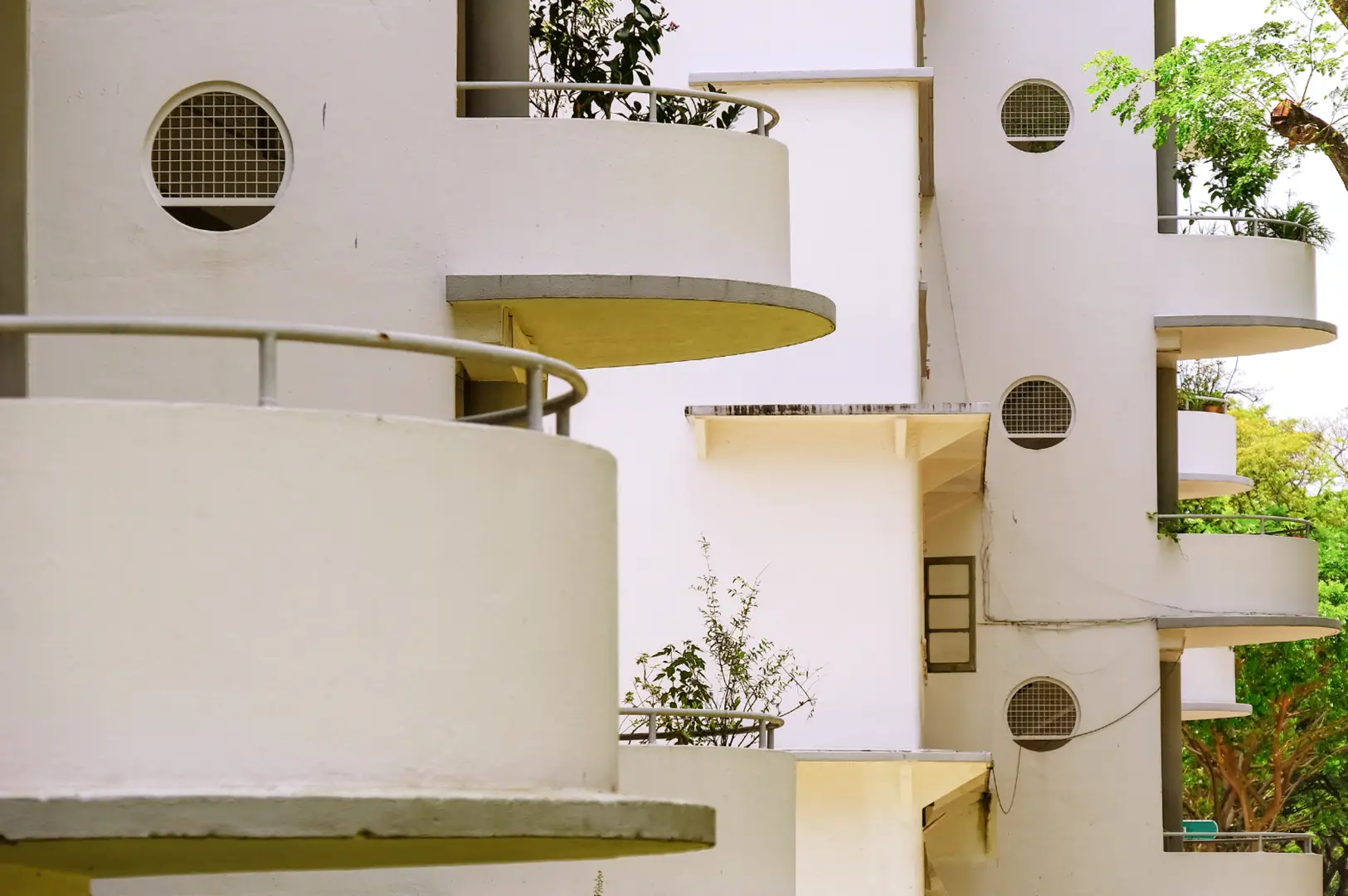
What makes Tiong Bahru worth photographing when so much of its beauty is already familiar?
Perhaps it is the details we keep walking past.
Tiong Bahru is often photographed for its distinctive architecture, curved balconies, and quiet residential streets. These features give the neighbourhood its recognisable character. Yet I find that the most interesting photographs are not always the ones that capture the entire building. Sometimes, they are hidden in the smaller spaces between them.
Photography has taught me to pay attention to what familiarity makes invisible.
An afternoon walk through Tiong Bahru reveals these moments gradually. Sunlight catches the edge of a concrete staircase. Shadows stretch across an old corridor. A bicycle rests beneath a window, its shape briefly framed by the surrounding architecture. These details rarely demand attention, but through a camera, they become compositions worth keeping.
The neighbourhood does not need to change for the photograph to feel different.
I often think about how walking changes the way we photograph a place. Moving slowly allows us to notice relationships between buildings, people, and everyday objects. It is something reflected in the neighbourhood observations shared by Neighbourhood Life, where exploring Tiong Bahru on foot offers another way to appreciate its character.
For me, the challenge is resisting the obvious frame.
The curved balconies are beautiful, certainly. But photographing them from the same familiar angle rarely tells me anything new. I prefer looking for contrasts: old architecture against modern storefronts, warm afternoon light against weathered walls, or a passing figure briefly completing an otherwise empty composition.
These are moments that cannot always be planned.
Light becomes especially important in a neighbourhood like Tiong Bahru. Its architectural lines create natural frames, while shaded walkways offer opportunities to experiment with contrast. I sometimes expose for the brighter areas, allowing the shadows to deepen and reveal the geometry of the buildings.
A wider lens can capture the relationship between structures, but a tighter composition often reveals more character. A window, a doorway, or the repetition of concrete patterns can communicate the atmosphere of a place without showing the entire street.
The difference is often a matter of attention.
I keep returning to the belief that familiar places deserve repeated observation. Tiong Bahru reminds me that photography is not always about discovering somewhere new. Sometimes, it is about returning to somewhere familiar with enough patience to notice what has been there all along. For more reflections on photographing Singapore’s everyday spaces, visit our site.
The streets remain the same.
But the way we see them can change.