There are moments when my hand reaches for the camera and stops.
Once, it was at a hawker centre late in the afternoon. An elderly man sat alone near the edge of the seating area, his coffee untouched beside him. The light coming through the open side of the building caught half his face. Behind him, tables were being wiped down. Trays knocked against plastic. Someone called out an order number.
Photographically, everything was there.
I did not take the photograph.
For a long time, I thought being a serious photographer meant being ready. Camera accessible. Exposure set. Eyes constantly looking for the second when gesture, light, and place aligned.
There is truth in that. Moments disappear quickly.
But readiness can become its own kind of impatience.
Walking through Singapore with a camera has taught me that seeing something does not automatically give me a reason to photograph it. There are scenes that ask to be recorded, and others that seem to ask for something quieter.
Attention, perhaps.
I notice this most in places where daily life happens close together. At wet markets. Under void decks. Along the corridors of older estates. Inside neighbourhood shops where the person behind the counter has occupied the same few square metres for decades.
A camera changes these spaces the moment I lift it.
Sometimes the change is small. A person straightens their back. A conversation pauses. Eyes move towards me. The scene that interested me disappears precisely because I tried to keep it.
Other times, the question is not whether I can make the photograph.
It is whether I should.
Photography trains us to notice vulnerability as readily as beauty: tiredness on a face, an argument overheard from a few metres away, someone sleeping in a public place, a private gesture happening inside a very public city. These moments can make powerful photographs.
Powerful is not the same as necessary.
I have missed images because I hesitated. I know that.
But I have also stood in places without photographing them and remembered more than I expected: the slow movement of an uncle folding newspapers at his shop, rain collecting along a five-foot way, two people speaking softly while the city moved around them.
No file. No frame.
Still, something remains.
I think photography becomes richer when the camera is not allowed to make every decision. Looking without photographing reminds me that the world is not a collection of potential images waiting for me to claim them.
Sometimes I lower the camera because the moment has already given me enough.
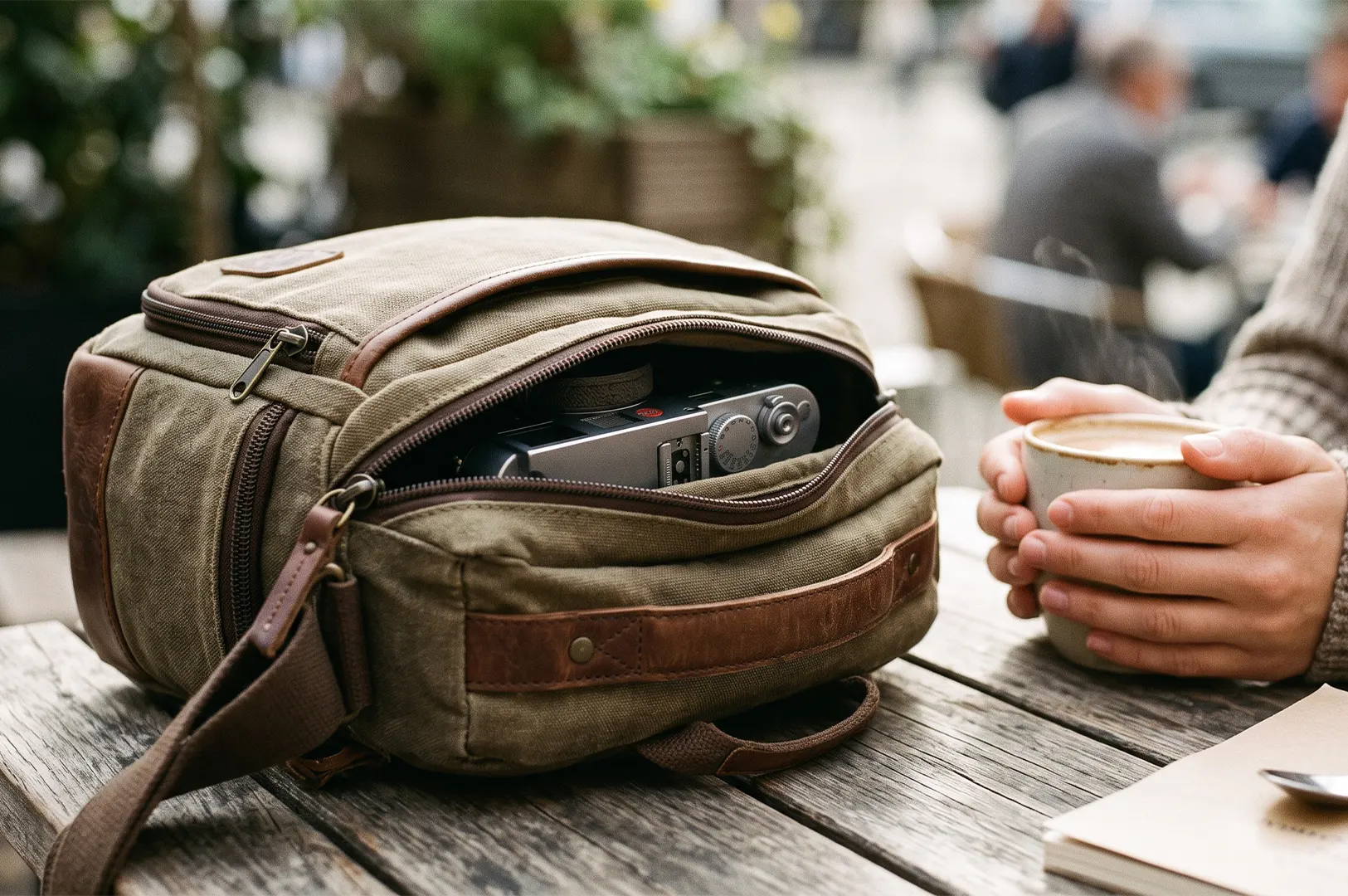
Sometimes I leave it in the bag because my presence matters more than the picture.
And sometimes the most respectful way to remember a scene is simply to have been there.