
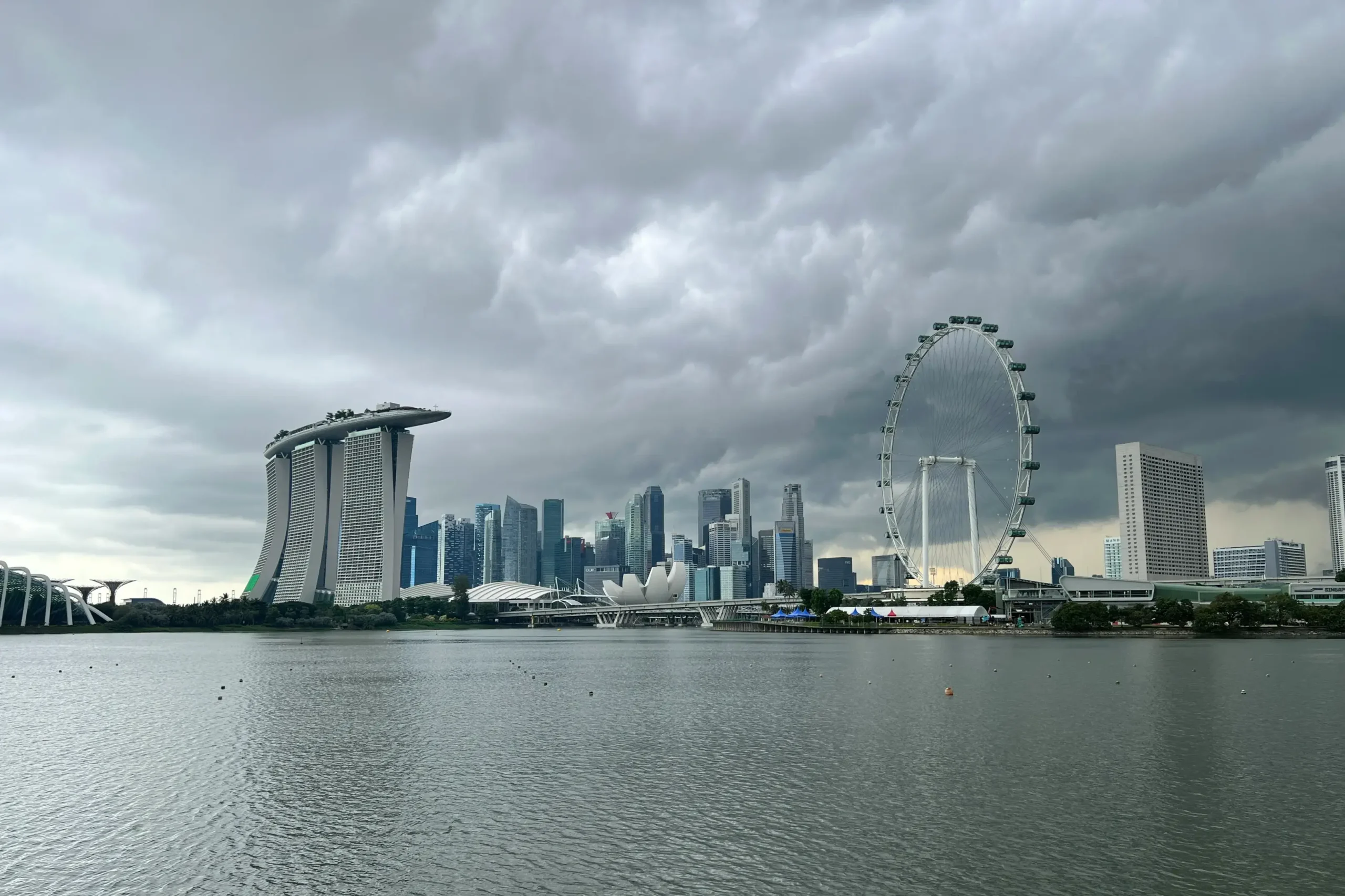
There is a rhythm to Singapore that many miss until the skies open up. For most, the monsoon Singapore season means canceled plans and retreat indoors. For me, it’s an invitation.
I recall standing under a Little India shophouse awning as a torrential downpour turned the street into a shimmering river of color. A woman with a bright yellow umbrella hurried by, her reflection a fleeting splash of gold on the wet asphalt. In that instant, the scene transformed: dramatic, moody, and alive; revealing Singapore’s candid energy during the northeast monsoon season.
Monsoon Thundery Showers and the Best Photo Spots
Over the years, I’ve embraced the rain, seeing how gray skies, dramatic clouds, and wet streets elevate Singapore photography from snapshots to emotional stories. This visual exploration shows how the monsoon season offers photographers a unique chance to capture the city’s beauty year round.
1. The Power of Reflections: The Central Business District
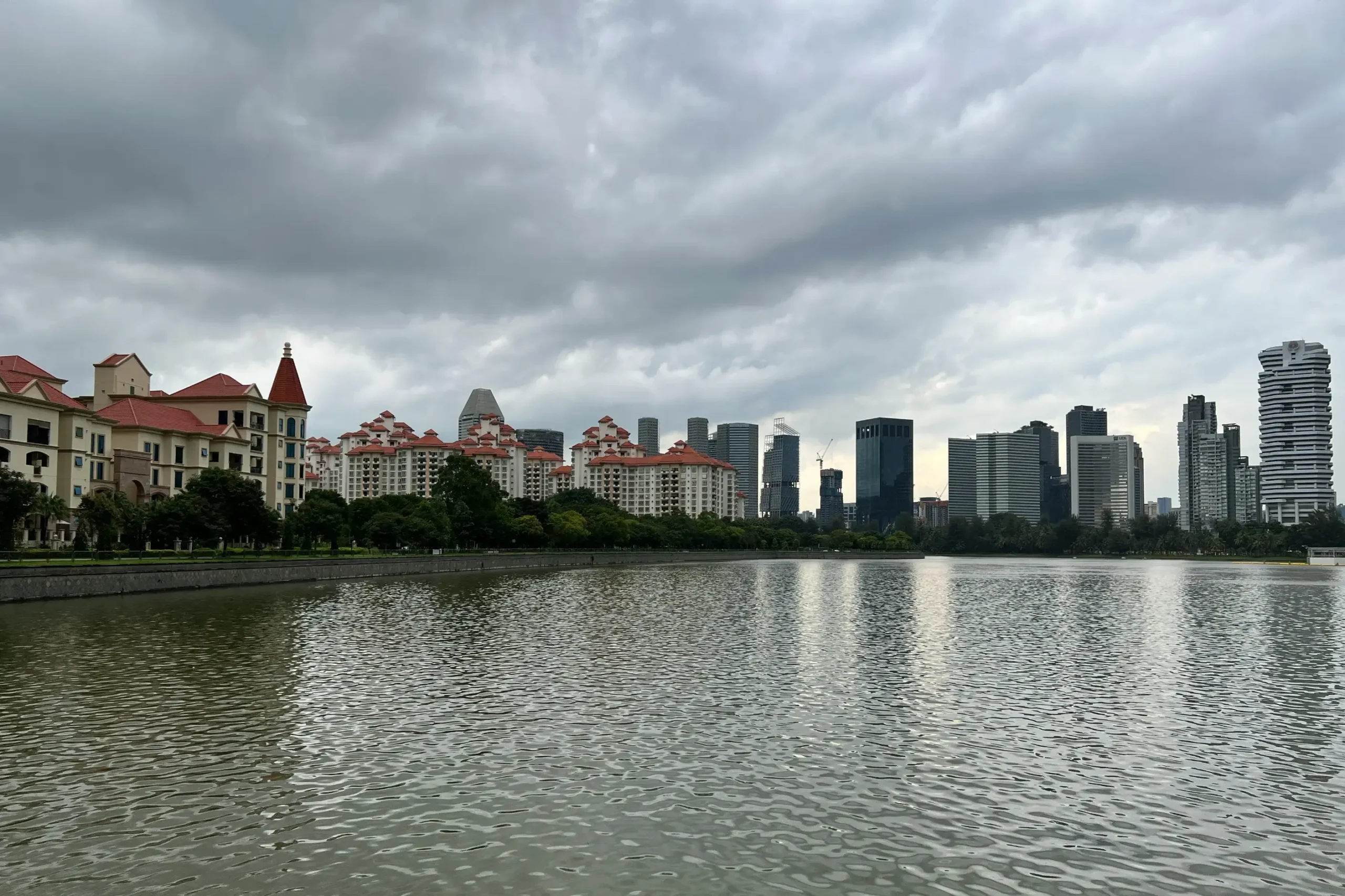
Location: The area around Raffles Place and the Singapore River in the heart of Singapore’s CBD.
After a period of heavy rainfall during the northeast monsoon season, the polished granite and glass surfaces of the CBD become giant, distorted mirrors. The modern building facades, with their sleek lines and glass architecture, add striking visual interest and make this area especially appealing for Singapore photography.
The familiar skyline featuring Marina Bay Sands and the Fullerton Hotel warps and ripples on the wet ground, creating abstract, painterly compositions that capture the dramatic weather conditions typical of the northeast monsoon. One evening during the northeast monsoon, after a heavy downpour, I headed to the riverfront. The rain had stopped, but the ground was still saturated from the total rainfall earlier in the day. I placed my camera low to the ground, almost touching a large puddle.
By using the reflection as my main subject, the iconic skyline became a supporting element in a much more abstract and compelling image. It was the same location everyone photographs, but seen through a completely different lens, showing the beauty of Singapore during the monsoon season.
Photo Tips: Get low for the best compositions by looking down. A wide-angle lens (16-35mm) is ideal to capture the scale of reflections. Use a polarizing filter to control glare on water. The blue hour, right after sunset and rainstorms, offers the best light to photograph illuminated buildings reflected in puddles, creating dramatic and memorable Singapore photography during the northeast monsoon season.
2. Moody Street Portraits: Chinatown
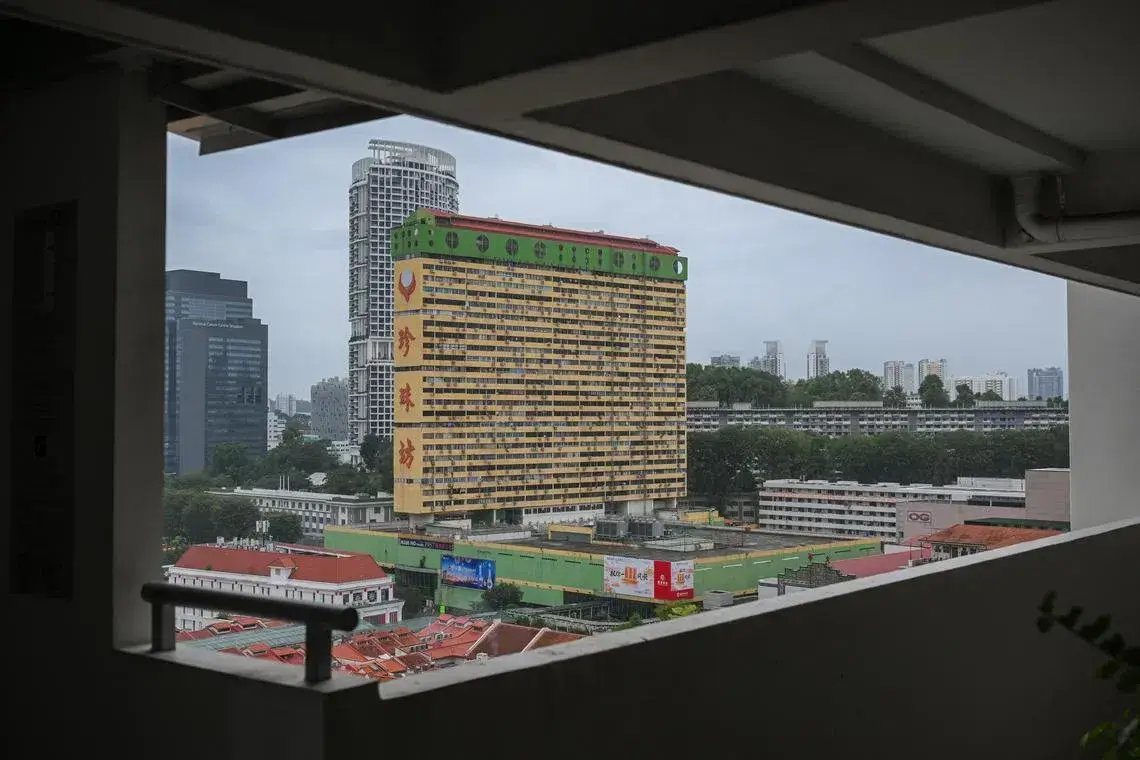
Location: Chinatown’s back alleys and covered walkways, People’s Park Complex
The back alleys and covered walkways of Chinatown are filled with vibrant street art, making them visually striking for Singapore photography. This area is also renowned for its bustling street food scene, with colorful hawker stalls and local dishes providing unique photographic opportunities. Numerous restaurants, and even the People’s Park Complex, add to the lively atmosphere.
The rain brings people together under shared shelters. The covered “five-foot ways” of the shophouses become temporary community spaces. People wait out the storm, creating incredible opportunities for candid environmental portraits. The soft, diffused light of an overcast sky during the northeast monsoon conditions is also incredibly flattering. During a sudden downpour on Temple Street in the first half of the northeast monsoon season, I took cover under a large awning.
An old uncle sat on a plastic stool, calmly watching the rain, his face illuminated by the light from a nearby shop. The rain isolated him, creating a bubble of tranquility amidst the chaos. I used a 50mm f/1.4 lens to capture his quiet expression, the shallow depth of field blurring the heavy thundery showers into soft streaks. It was a portrait not just of a man, but of a moment of peace during a typical monsoon day.
Photo Tips: Be patient and observant. Look for people interacting with the rain. A fast prime lens (like a 35mm or 50mm f/1.8) is ideal for these low-light situations. It allows you to shoot without a flash, preserving the natural, moody atmosphere.
3. Dramatic Skies Over the Coast: East Coast Park
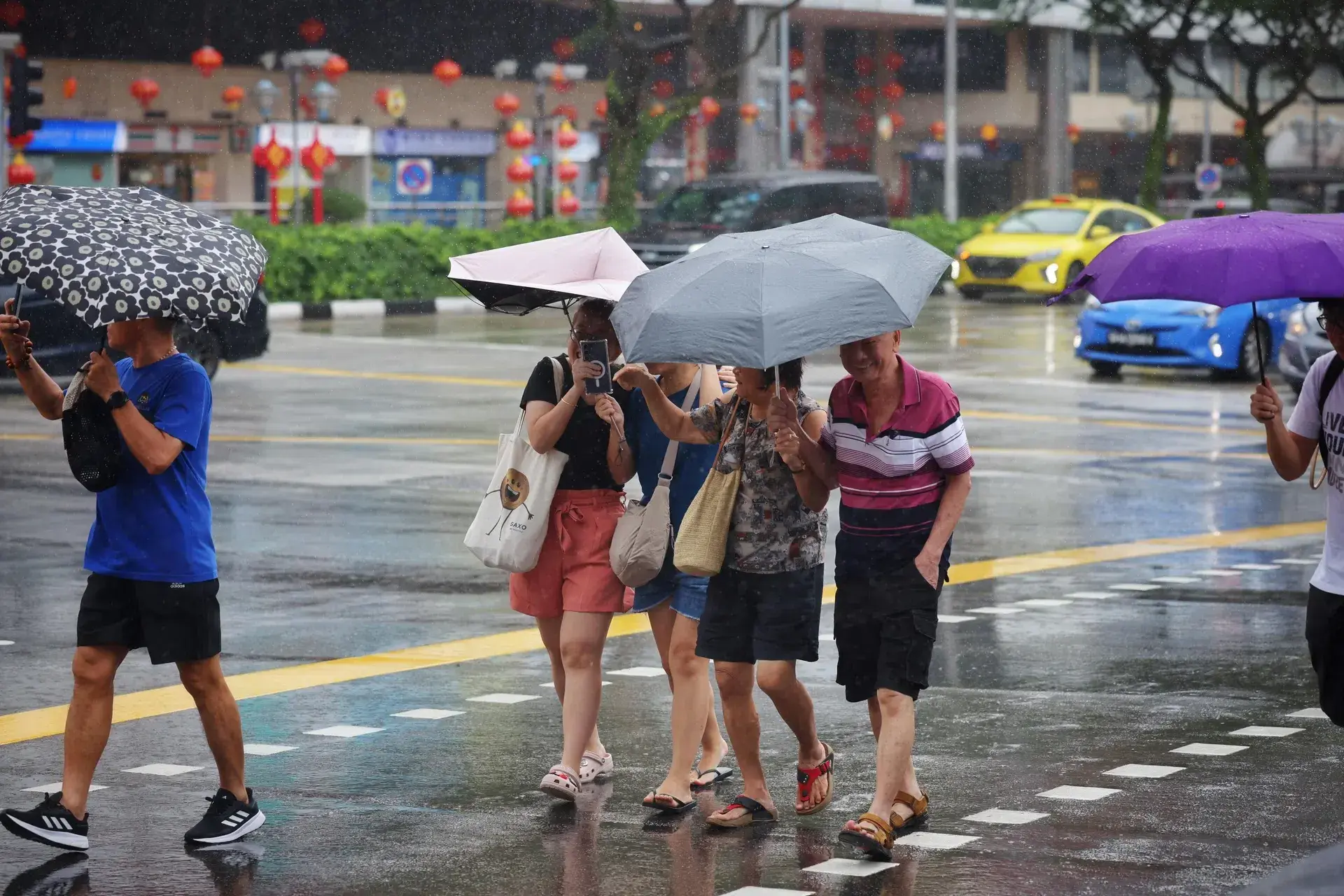
Location: Along the coastline of East Coast Park
The monsoon does not just bring rain; it brings incredible skies. The moments just before or after a storm are when the clouds are at their most dramatic, full of texture, color, and drama. During the northeast monsoon, strong low-level winds sweep across the park, shaping the movement of clouds and adding energy to the scene.
The open expanse of the sea at East Coast Park provides an uncluttered canvas for these epic skyscapes, and as an island, Singapore’s coastal geography enhances the sweeping views and dynamic weather patterns visible from the shore. I once raced to the coast after seeing a storm cell approaching on the weather radar via the myENV app.
The wind was strong, and the sky was a menacing shade of gray. Just as the heavy rain began, the sun broke through a gap in the clouds for a few hours, lighting up the horizon in a brilliant gold. The contrast between the dark clouds and the golden light was breathtaking. A tripod was essential to keep my camera steady in the wind.
Photo Tips: A weather-sealed camera and lens are a huge asset here. If you do not have one, a simple rain cover will do. Use a wide-angle lens to emphasize the vastness of the sky. A graduated neutral density (GND) filter can help you balance the exposure between the bright sky and the darker sea. The afternoon is often the best time to capture dramatic lighting and cloud formations, especially as storms develop and sunlight breaks through.
Essential Tips for Monsoon Season Photography
- Check the Weather and Watch Out for the News: Always stay updated by visiting the NEA website or using the myENV app to check the latest weather forecasts and alerts. Knowing when heavy thundery showers or Sumatra squalls are expected can help you plan your photography trip effectively during the northeast monsoon season.
- Protect Your Gear: A good rain sleeve for your camera is a wise investment. At a minimum, carry a few large plastic bags. A lens hood is also crucial to keep raindrops off your front element.
- Embrace High ISO: Rainy days are dark days, with lower light levels especially during the evening and night. Do not be afraid to increase your ISO to get a fast enough shutter speed to avoid motion blur. Modern cameras handle high ISOs very well.
- Look for Puddles: They are your best friend. Puddles create leading lines, reflections, and unexpected compositions that add drama and mood to your Singapore photography during the monsoon season.
- Slow Your Shutter: Experiment with a slow shutter speed (around 1/15s to 1/60s) to turn falling raindrops into artistic streaks of light, capturing the dynamic weather conditions typical of the northeast monsoon.
Knowing More on the Northeast Monsoon Conditions
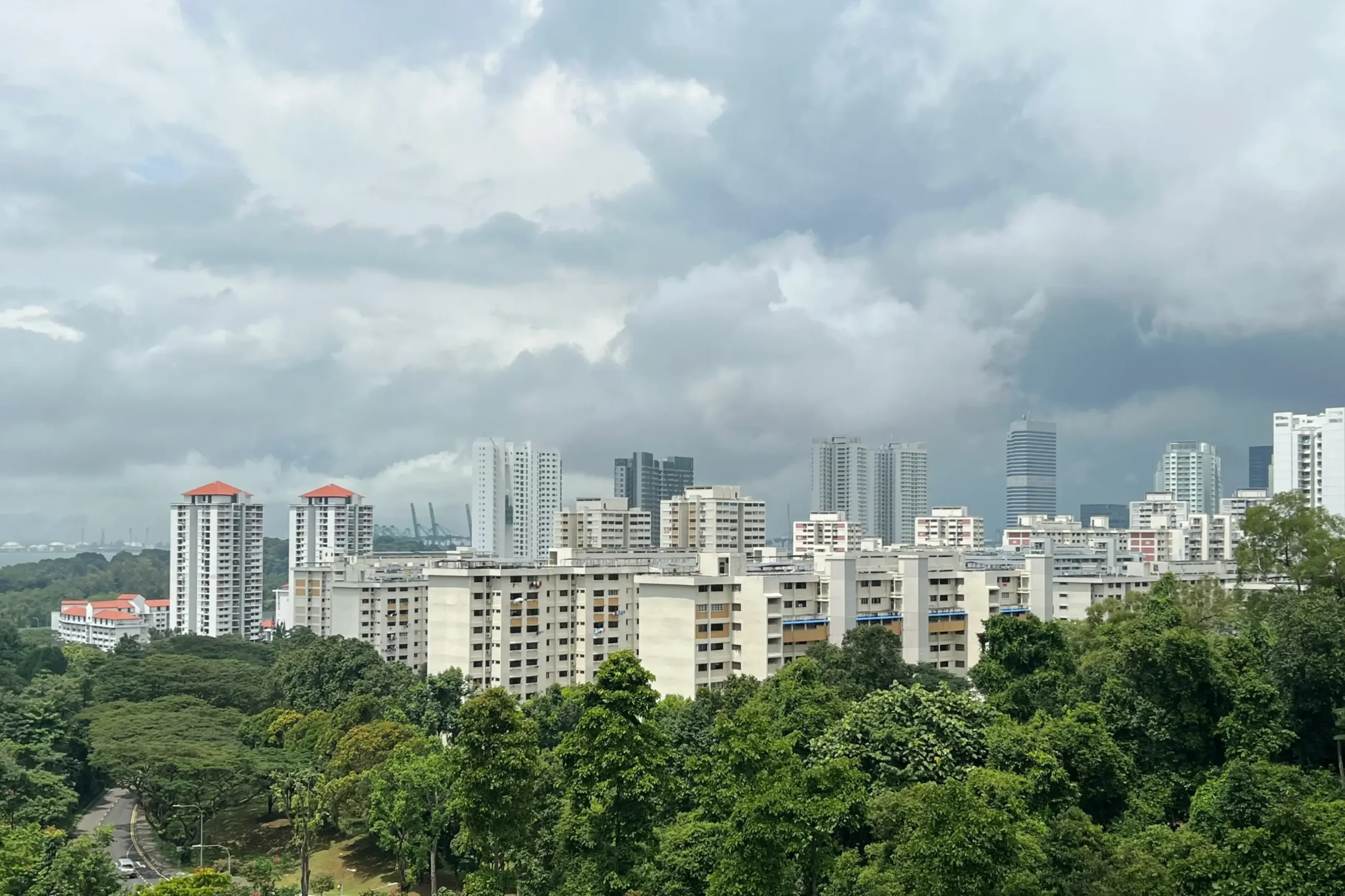
Now, one may ask as to why it is a necessity for Singapore photographers to know about the monsoon season in a technical way; most specifically the northeast monsoon season. This is because as a photographer, it is important that you know about your subjects to an extent that you get to prepare for it whether for your own safety or to be able to capture the best photos in consideration of the climatological reference period.
Moreover, it gives you a more in depth understanding of what you have to do in order to accomplish the full vision that you have. For example, during the northeast monsoon season, which typically runs from December to early March, photographers can expect dynamic opportunities created by frequent heavy rainfall, heavy rain, and heavy thundery showers across many parts of Singapore. Knowing this also gives you the information that the strong northeast winds, occasionally shifting to northwest during monsoon surges, bring dramatic skies and movement that add energy to your compositions.
Another vital information is how low level winds intensify the atmosphere, while Sumatra squalls sweeping in from the surrounding region deliver intense downpours and gusty winds, especially notable in the first half of December and March; it is incredibly perfect for capturing powerful weather scenes. October signals the transition into the wet phase, offering photographers a chance to document significant total rainfall and moody, rain-soaked environments, and create abundant reflections and saturated colors to enhance your images.
While daily maximum temperatures remain fairly stable in average during this season of Singapore, the cooler feel from cloud cover and rain can add a unique mood to your shots. After a storm, visibility improves within a few hours, allowing for crisp, clear captures of the city and its surrounding. Considering the rainy days that the country experiences in an average monthly, there will be plenty of chance for you to get your best shot.
As mentioned, for real-time inspiration and planning, photographers should regularly check the NEA website and use the myENV app for the latest weather forecasts and service advisories. This also includes the consideration of visiting the Hill Street Police Station, not just of it being a photo spot for night photography where colorful shutters create striking visuals, but because said police station can provide safety precautions during such a moody but dangerous season.
Playing with the Camera During a Heavy Rain
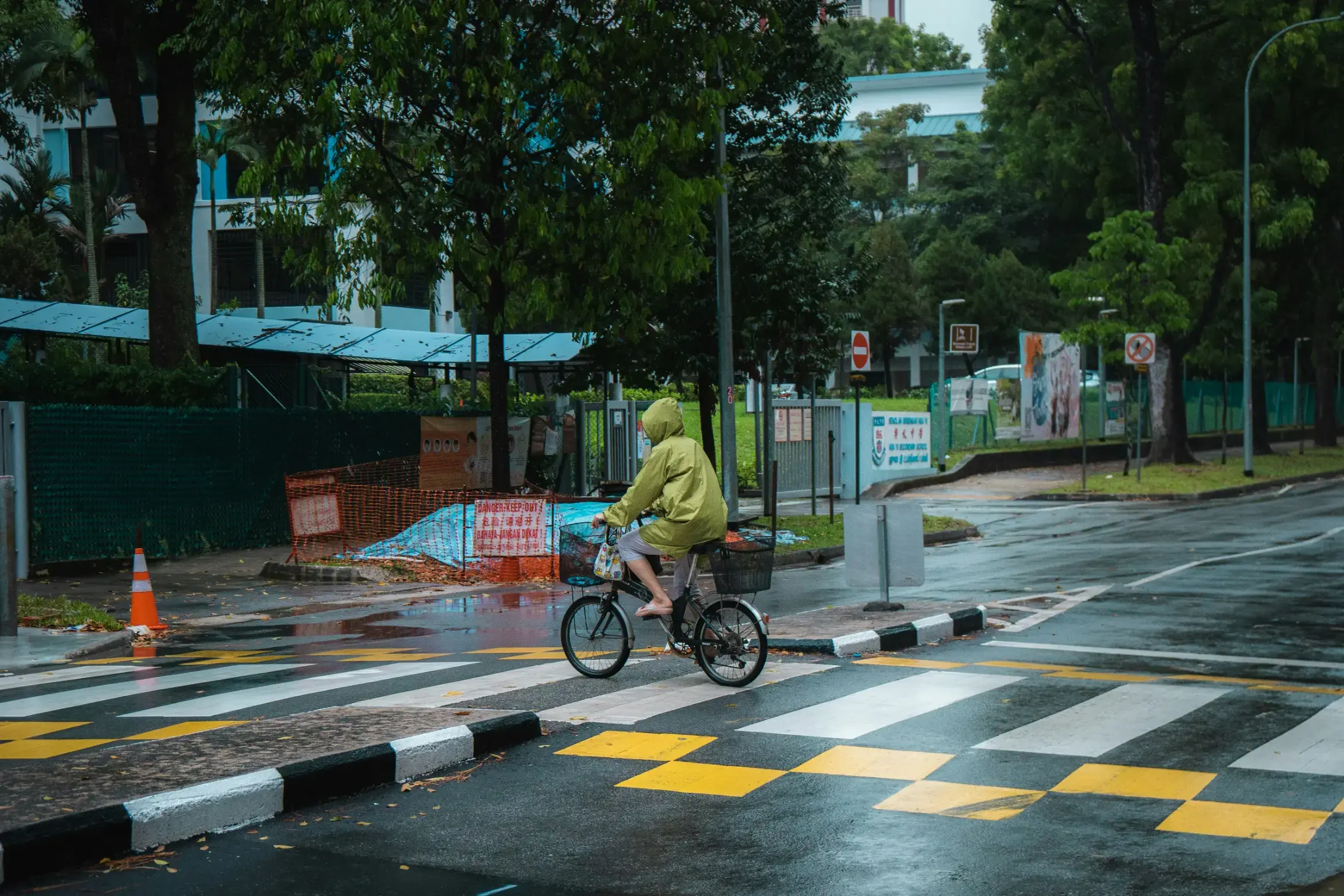
As a photographer, it is indeed fun and exciting to visit and photograph Singapore’s surrounding region, revealing a side of the city that many miss. The kind that you get on an unexpected stop over while pausing life. On most days during the northeast monsoon season, the rain and dramatic skies offer unique opportunities to capture moments in most parts of the city that feel alive and vibrant in a way rarely seen elsewhere in the world.
Photographing the monsoon Singapore season is about finding beauty in the imperfect. It is about showing a side of our city that is more raw, more emotional, and perhaps more authentic than the endless sunny days. The rain washes the city clean and reveals a different kind of light, a different kind of story.
I invite you to take a walk along the bay or through bustling neighborhoods (and even hotels), where you can discover and explore free and cheap photo spots that showcase the city’s dynamic weather and lively street scenes. From this blog, you can see how enamored I am with the beauty of such a natural disaster as one may call; because photography, is seeing the beauty in the most beastly situations.