
In photography, shadows are often treated as leftovers: absence, noise, something to fix in post. But in a kopitiam, you learn the opposite. Shadows reveal.
Light gets the credit. It defines form and directs the eye. Yet without shadow, a frame turns flat and weightless. Shadow gives light consequence. It asks: What happens where light cannot fully reach?
Shadows are not missing data. They are compressed information, carrying shape, direction, and mood. Where light says, look here, shadow says, notice how this feels.
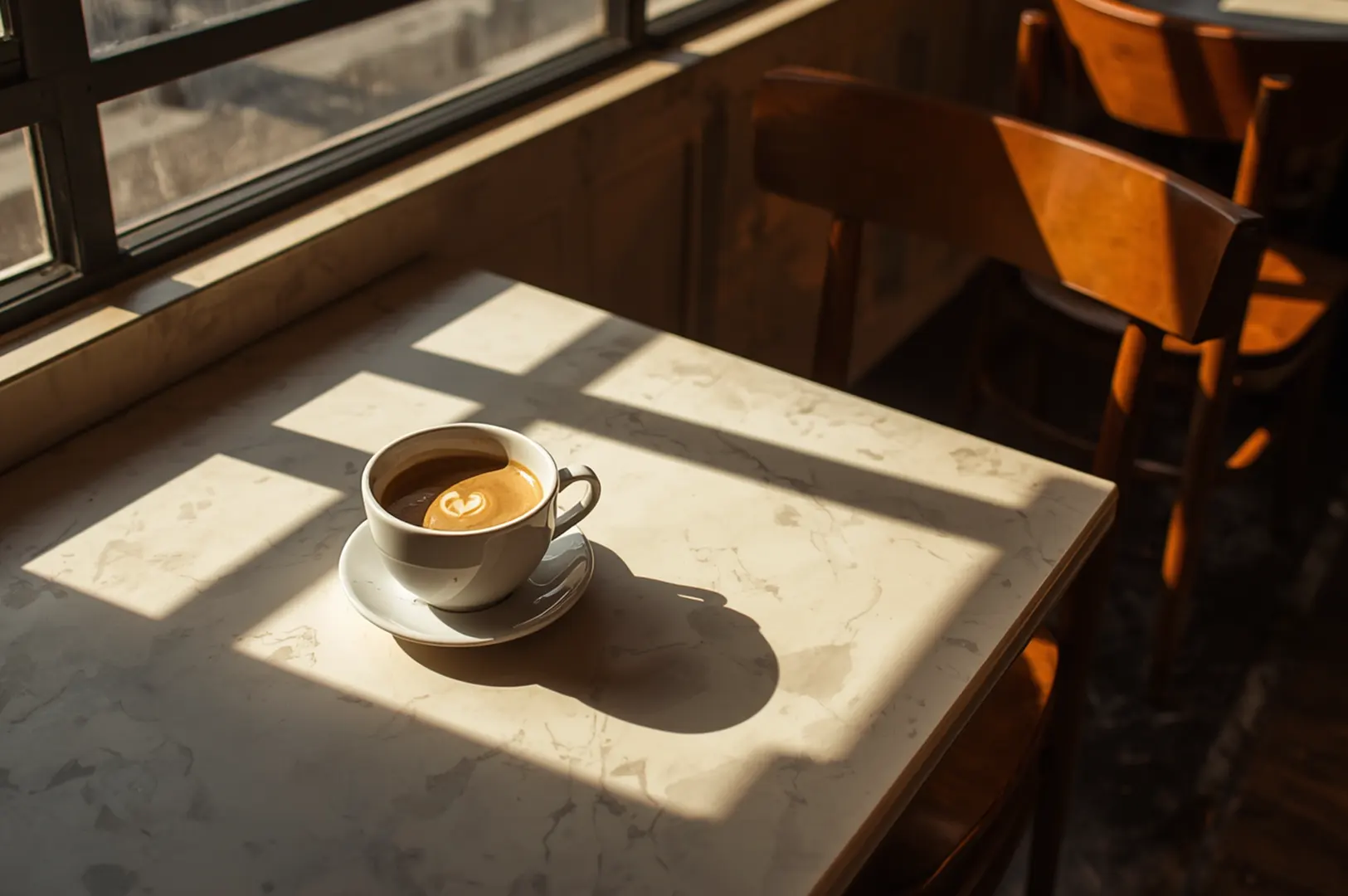
In a kopitiam, shadows keep moving. They stretch across marble tables, gather under stools, and climb walls as the day shifts. They make time visible and remind you that photography is choosing a moment inside motion.
Technically, shadow teaches restraint. Lift everything too much and the image becomes explanation instead of experience. Leaving darkness is not a mistake; it preserves depth, hierarchy, and mystery. To photograph shadow well is to photograph relationships: subject and surface, movement and stillness, seen and implied. You wait for alignment.
In street work, shadow often leads the story. A passerby becomes secondary to the shape they cast. A frame of light reorganises the scene. Shadow creates narrative not by adding information, but by removing certainty.
Good photographs hold a balance. Too much shadow collapses into obscurity; too little loses depth. The kopitiam understands this. It lets light fall where it may, and shadow form where it must.
There are mornings when the shadow under a cup is sharper than the conversation around it. The rim cuts a crescent onto the table, and suddenly the scene has a compass: the light is coming from somewhere specific, at a specific hour. You learn to read that direction the way you read gestures. In the kopitiam, shadow is a quiet timestamp.
And sometimes the most honest portrait is built from what stays unlit. A face turned half away from the window keeps its private side, and the photograph respects that boundary. Letting shadow remain is a way of letting people and places keep their texture, not just their detail. The darkness doesn’t hide the subject; it gives the subject room to breathe.
Shadow is not the opposite of light. It is its memory—what lingers after light has moved on.