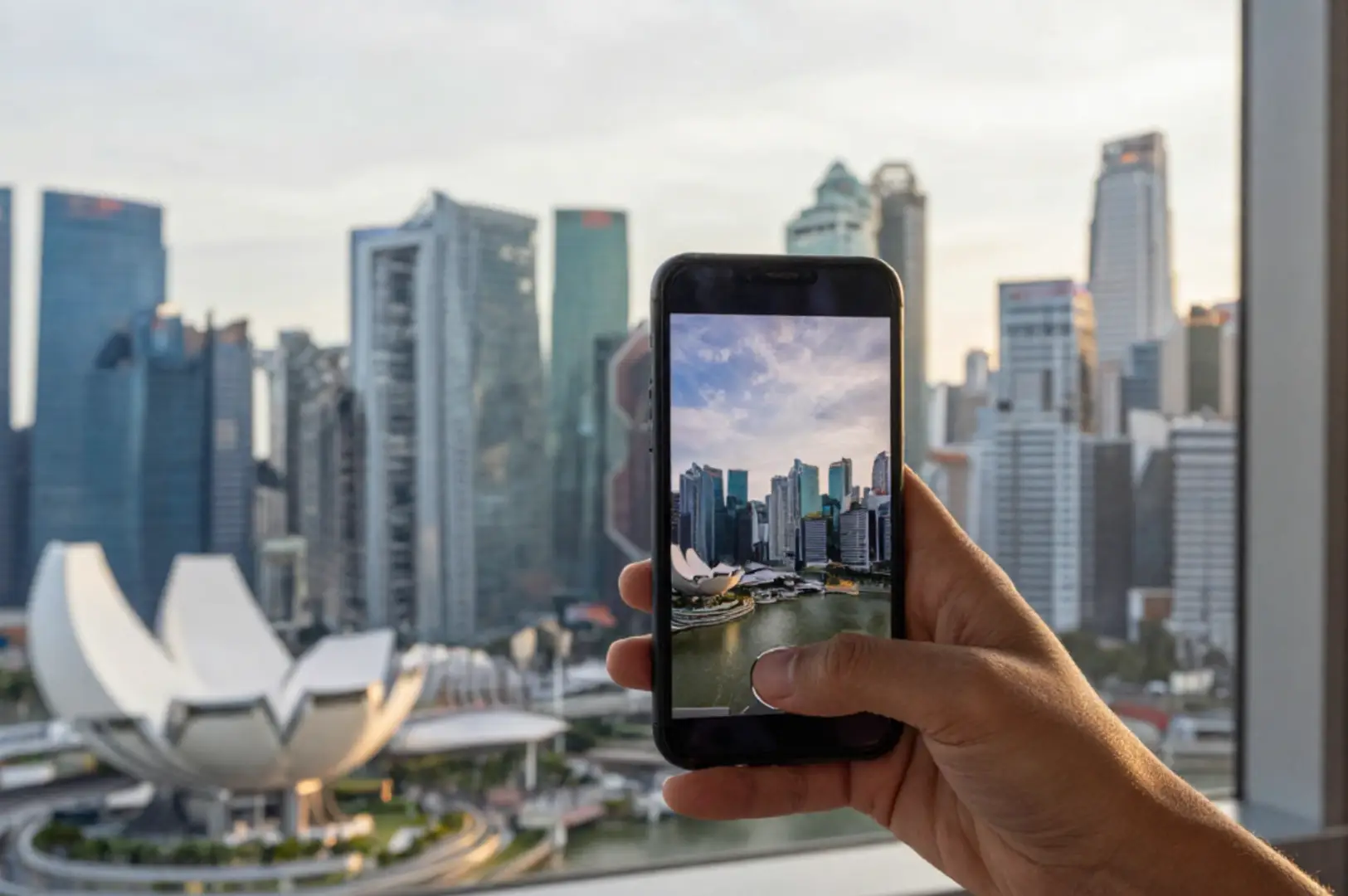
I left my camera at home for an entire week.
Not because I wanted to prove that a phone could replace it. That has never interested me. I simply wanted to remove the quiet excuse that I was waiting for the “right” camera before making a photograph.
Singapore did not seem to notice the difference.
The morning crowd still flowed through Tanjong Pagar. Kopi continued to steam beneath fluorescent lights in neighbourhood coffee shops. Rain arrived without warning, leaving puddles that briefly turned HDB blocks into reflections rather than buildings.
The photographs were still there.
I only had to pay attention.
That week became a quiet reminder of something I often forget. Photography has always depended more on presence than equipment. A phone cannot match the flexibility of a dedicated camera, especially when light becomes difficult. But it offers something equally valuable—it never asks you to hesitate.
That philosophy has shaped SG Nomad Photographer, where the camera is never the starting point. Observation is.
Without a larger camera in my hands, I found myself blending into the rhythm of the city. People paid less attention to me. I spent less time adjusting settings and more time watching how sunlight travelled across tiled corridors, how commuters paused just long enough to check their reflections in train windows, and how an elderly couple quietly shared breakfast before the rest of the neighbourhood arrived.
The photographs became simpler.
And somehow, more honest.
The limitation of using a phone also changed the way I composed a frame. Instead of relying on zoom, I walked closer. Instead of chasing technical perfection, I waited for better light. I stopped thinking about what the camera could do and started thinking about what the scene was already offering.
By the end of the week, I realised I had missed very little.
Not because my phone was extraordinary, but because Singapore had continued telling its quiet stories regardless of what camera I carried.
The best photographs were never hidden behind expensive equipment.
They were waiting in ordinary places, asking only that I slow down long enough to notice them.
Sometimes, the smallest camera is simply the one that reminds you to look first—and photograph second.