
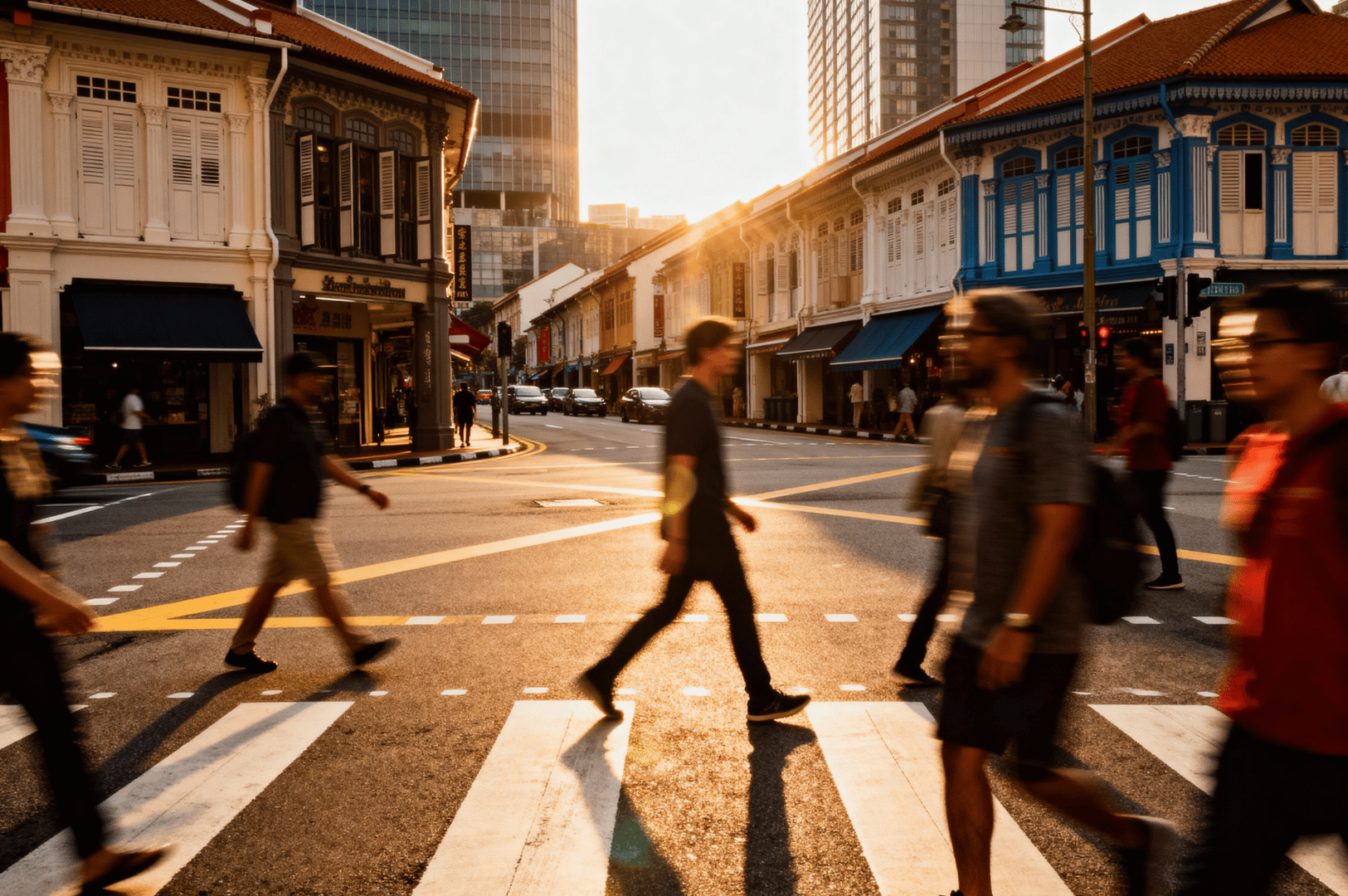
Street photography is a unique art form where the city becomes both canvas and gallery. For many street photographers, the thrill lies in capturing urban landscapes, candid moments, and street portraits that reveal real life unfolding in Singapore’s bustling districts. Yet every street photograph also raises important questions about street photography ethics—how do we create engaging street photos while respecting the people who fill these scenes?
Finding the Human Story on the Street
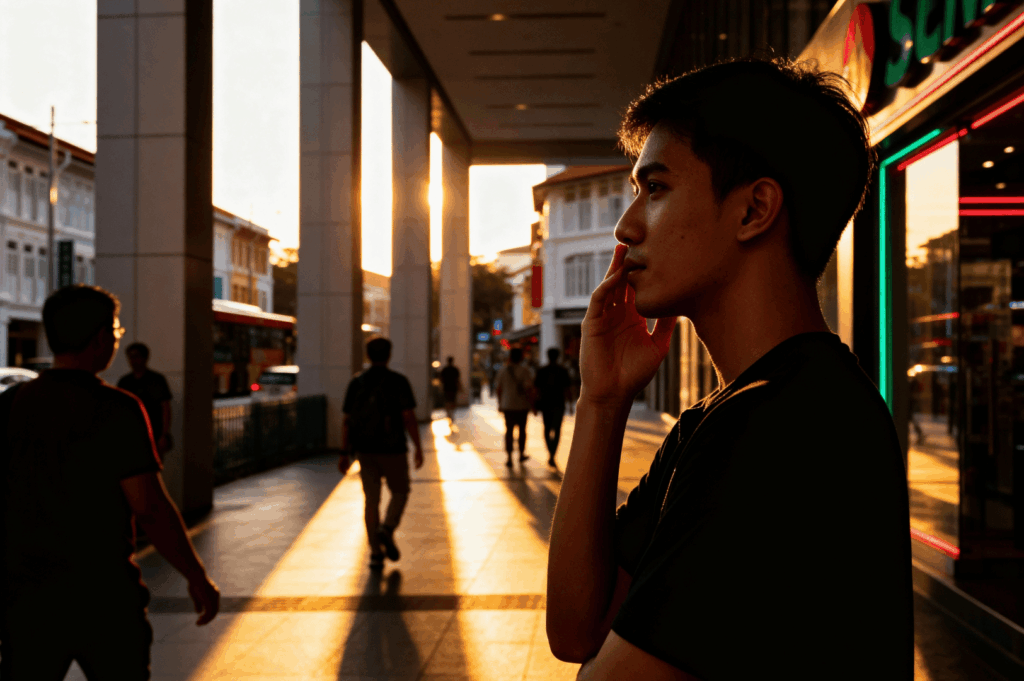
Walking Singapore’s busy districts with my camera, I’m constantly drawn to the energy of the streets. You find stories in small gestures, the expressive body language of strangers, the interplay of light and shadow at sunset, and the straight lines of modern architecture framing the scene. Many street photographers swear by the golden hour or early morning for the best weather and dramatic light, but I believe even a sunny day or night scene can yield great photos if you know where to look.
Shooting street photography is never just about the people. Urban photography often means exploring city photography techniques—like using leading lines and space to add depth, or shifting to portrait orientation for powerful street portraits. Sometimes, focusing on a person’s surroundings—the background of someone’s house, police officers directing traffic, or the contrast of city light on people’s faces—is just as interesting as the subject itself. Every shot is an opportunity to create art from ordinary life.
Camera Settings, Gear, and Approach
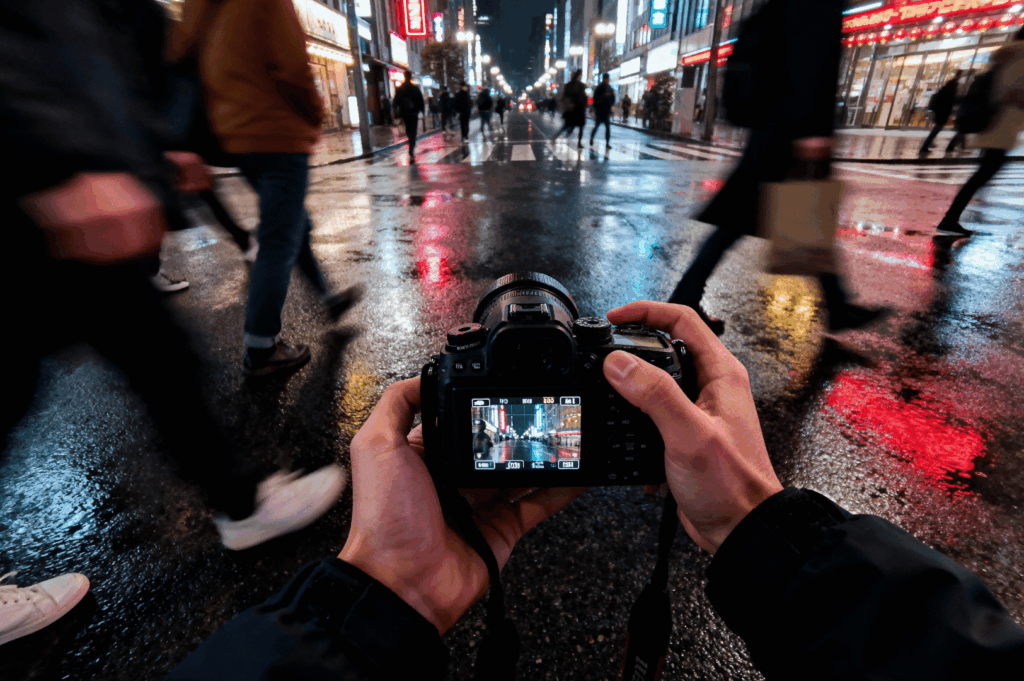
No two street photographers are exactly alike, but most agree on the importance of staying light and mobile. I carry a small bag with a mirrorless camera, a trusted zoom lens, or a fast prime to move swiftly between crowded corners and open spaces. Adjusting camera settings quickly is essential; sometimes I’ll set a faster shutter speed to avoid blurry images during movement, but I also experiment with long exposure for a creative twist when the night light turns the city into an impressionist painting.
Shooting street photography in Singapore isn’t about having the latest Canon camera, Sony Alpha low light, or most expensive gear. What matters most is understanding your style, learning how to capture moments before they vanish, and knowing how to frame people and spaces to guide the viewer’s eyes naturally through the image.
Street Photography Ethics: Respect and Responsibility
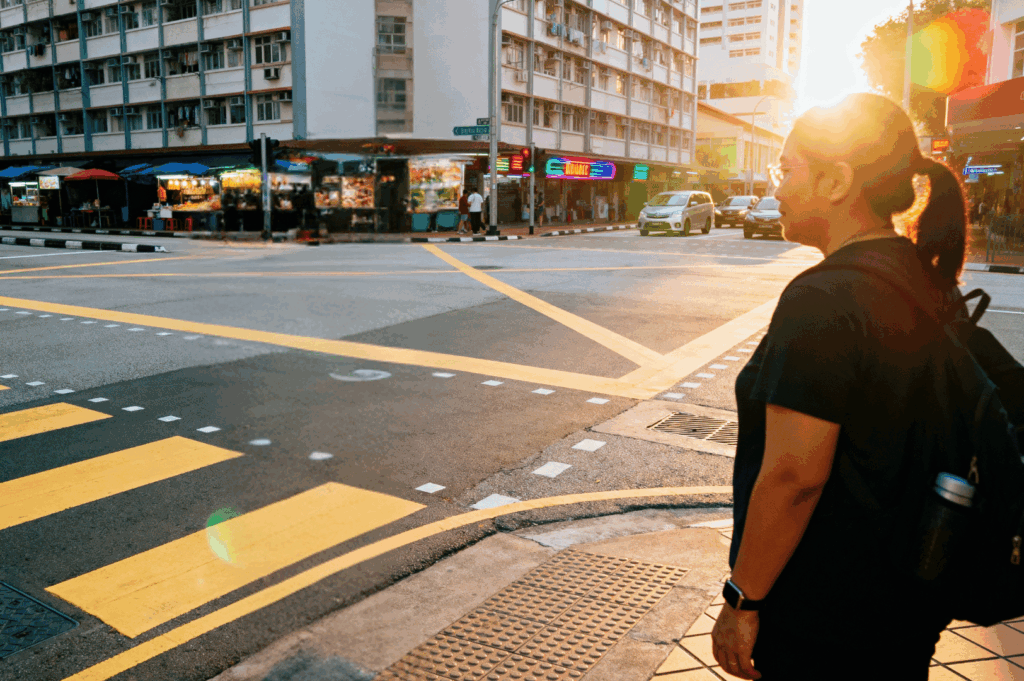
Street photography ethics go beyond legal questions. Just because you can take a picture in a public space doesn’t always mean you should. As street photographers, we capture real lives—families sharing a meal, friends laughing together, the stillness of homeless people resting at dawn. The street photograph that moves you may not be one the subject finds flattering or comfortable. That’s why respect is at the heart of every shot.
If someone feels uncomfortable, body language often says it all. Some turn away, shield their face, or avoid the lens. Nearly all photographers I know believe in reading these cues and lowering the camera if a person seems uneasy. It’s about earning the trust of the people you photograph, especially when shooting street portraits or scenes involving children, vulnerable individuals, or family photos.
Consent isn’t always required for every street photo, but as a matter of ethics, I’ll often gesture or share a smile. If the subject reciprocates, that’s a green light; if not, I move on. On occasion, police officers or other authority figures may approach—be cooperative, explain your project, and, if asked, delete a photo. Street photography is about making moments, not making others feel caught or exploited.
Creating Compelling Images: Practical Tips
Here are some street photography techniques and tips other photographers and I have picked up that keep both creativity and ethics in focus:
Know When Not to Shoot: Some moments—private grief, heated arguments, or distress—are best left unphotographed. As artists, our creative instincts should be balanced with empathy and good judgment.
Use a Discreet Lens: A zoom lens can help you frame interesting subjects from a respectful distance, but sometimes a wider lens draws you closer and makes you part of the scene. It’s up to you—but always mind your proximity.
Look for Interesting Light and Shadows: Shadows, reflection, and the interplay of light at sunset or night can add depth and narrative to urban photos. Great images often come from the patience to wait for the perfect light.
Focus on Composition: Use straight lines—windows, walkways, the edge of someone’s bag, or architectural features—as leading lines. This adds structure and can draw the viewer’s eyes directly to the action you want to highlight.
Talk to People: A quick conversation, friendly pose, or compliment can turn a stranger into a willing participant. Some of my favorite street portraits resulted from simply asking if I could take their picture after a brief exchange.
Balancing Art and Ethics
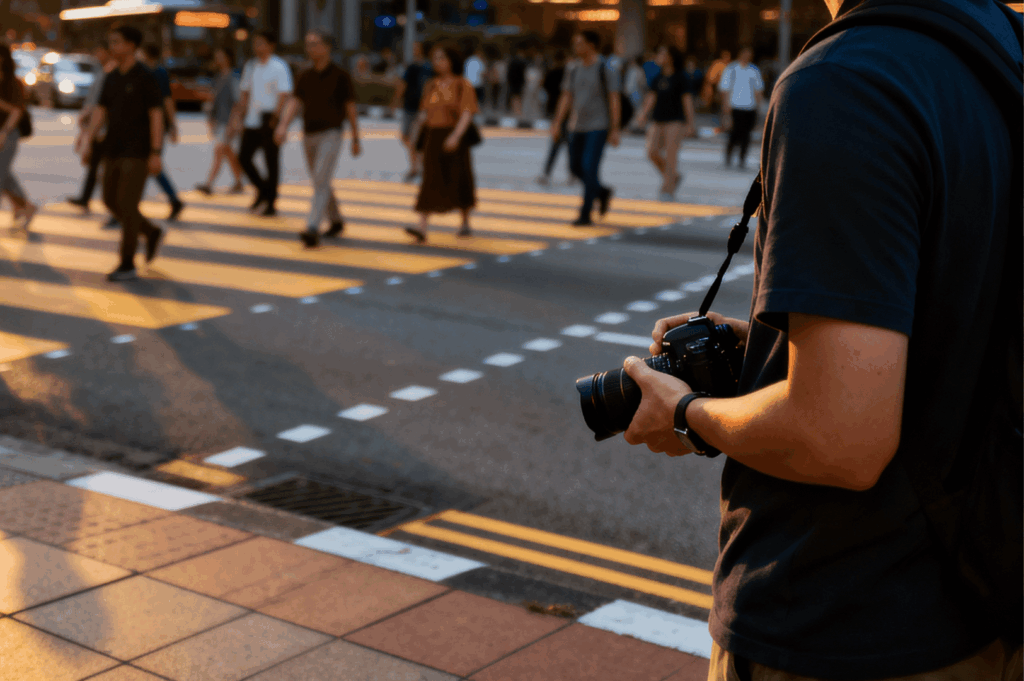
As a street photographer, I see the world through frames—sometimes zoomed in on a single face, sometimes wide to capture the pulse of a crowded street. Urban photography is a matter of perspective and timing, but it should always be built on a foundation of respect. The best photos are not only visually striking but also ethically sound, reflecting thoughtful choices about how and when to shoot street photography.
Are there scenes in your city you long to capture, or moments you let pass out of ethical considerations? How do you balance creativity with responsibility in your own photography? I’d love to hear your stories and thoughts.