
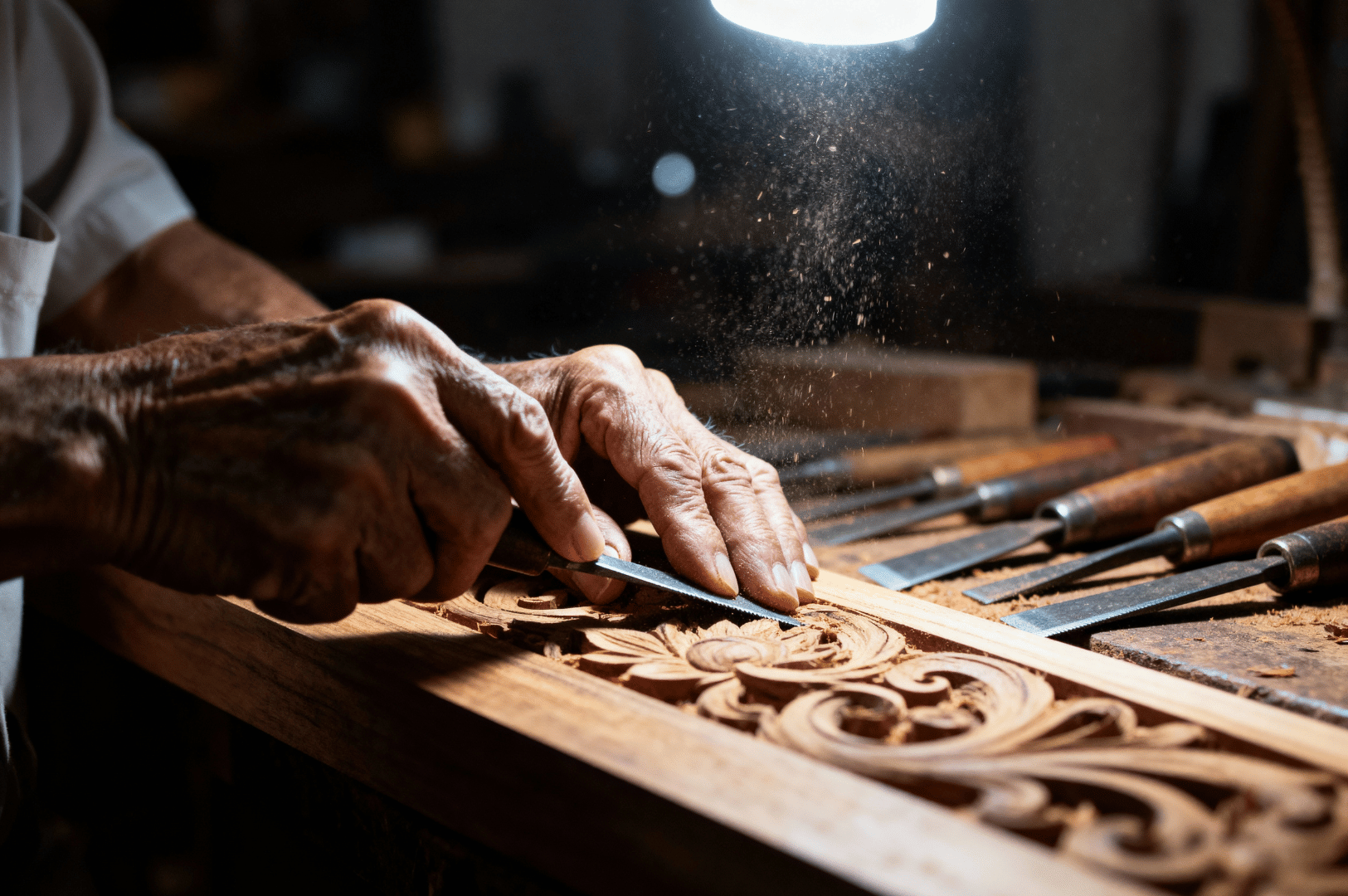
The air in the workshop hung heavy with the scent of aged wood and lacquer. Dust motes danced in the single beam of light slicing through the dim interior, illuminating the face of an elderly man bent over a piece of teak. His hands, gnarled and stained from a lifetime of work, moved with a slow, deliberate grace, coaxing a story from the wood with each pass of his carving tool. My camera felt impossibly loud in the quiet reverence of the space. The resulting image was a portrait that captured not only the man but also the unique atmosphere of his environment. The background of the workshop, filled with tools, wood shavings, and the patina of years gone by, added depth and context to the photograph, enriching the story it told. This moment, capturing one of Singapore’s last traditional letter carvers, felt more significant than any landscape or skyline I had ever shot. It was a race against time.
This project began with a simple goal: to create meaningful photographs of Singapore that looked beyond the familiar gloss of Marina Bay Sands and the bustling Singapore River. I wanted to find the soul of the city, and I found it in these quiet corners where heritage is practiced daily. This article is a behind-the-scenes look at my journey documenting Singapore’s vanishing traditional crafts.
Throughout this journey, I was invited into intimate workshops and limited-access spaces, gaining permission to capture authentic moments. Each photograph serves as a point of connection between the past and present, helping to protect and verify the legacy of these craftsmen. These images not only tell the story of the people but also the streets and harbours that shaped their lives.
Sharing these photographs on SG Nomad Photographer and via email has allowed me to reach a wider audience, inviting them to click and engage with Singapore’s rich cultural tapestry. The process of photographing these artisans has deepened my appreciation for the people behind the craft and the limited time we have to preserve their stories.
The Vanishing Heritage of Singapore
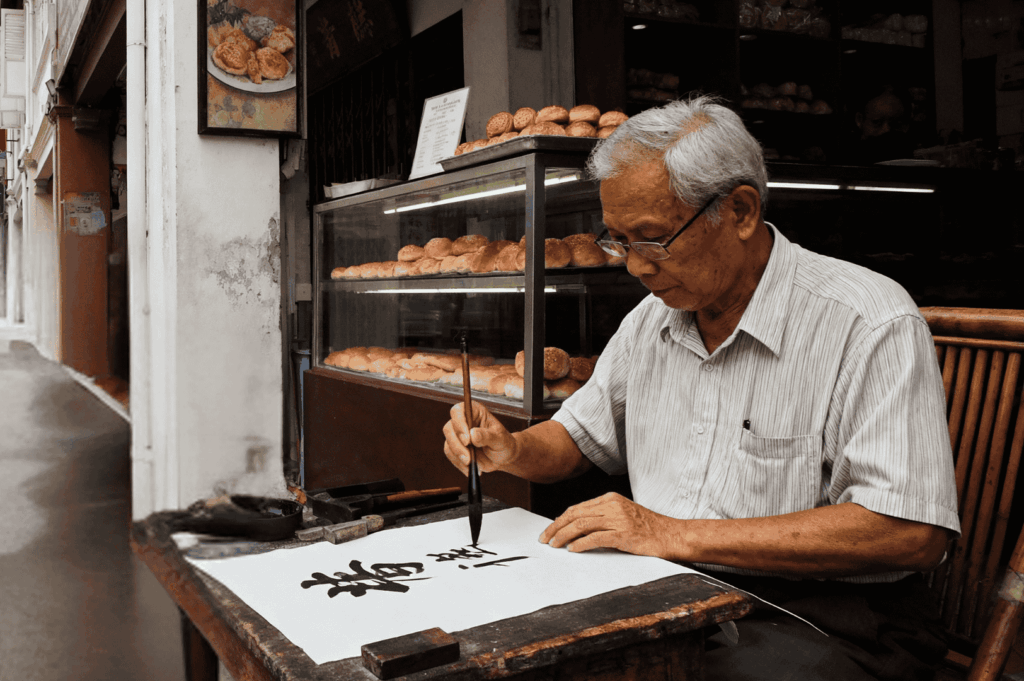
Singapore’s rapid modernization has brought incredible progress, but it has also cast a long shadow over our traditional crafts. Trades that once formed the backbone of our communities are now fading into memory. The rhythmic creak of rattan weaving, the fragrant steam of traditional bakeries using generations-old recipes, and the scholarly hush of a calligraphy master’s studio are becoming increasingly rare. We are losing more than just services; we are losing a tangible connection to our past.
These crafts are disappearing for a host of reasons. An aging generation of practitioners finds no young successors willing to take on the long hours and modest income. Changing consumer preferences lean toward mass-produced, cheaper alternatives. This is where heritage documentation becomes vital. Photography offers a way to create a permanent visual record of the skills, the tools, and the faces behind these trades. These photographs of Singapore serve as a crucial archive for future generations. Institutions like the national library play a key role in preserving and providing access to these photographs and related information, ensuring that Singapore’s heritage remains accessible for research and public engagement.
The Challenges of Documentary Photography Shots
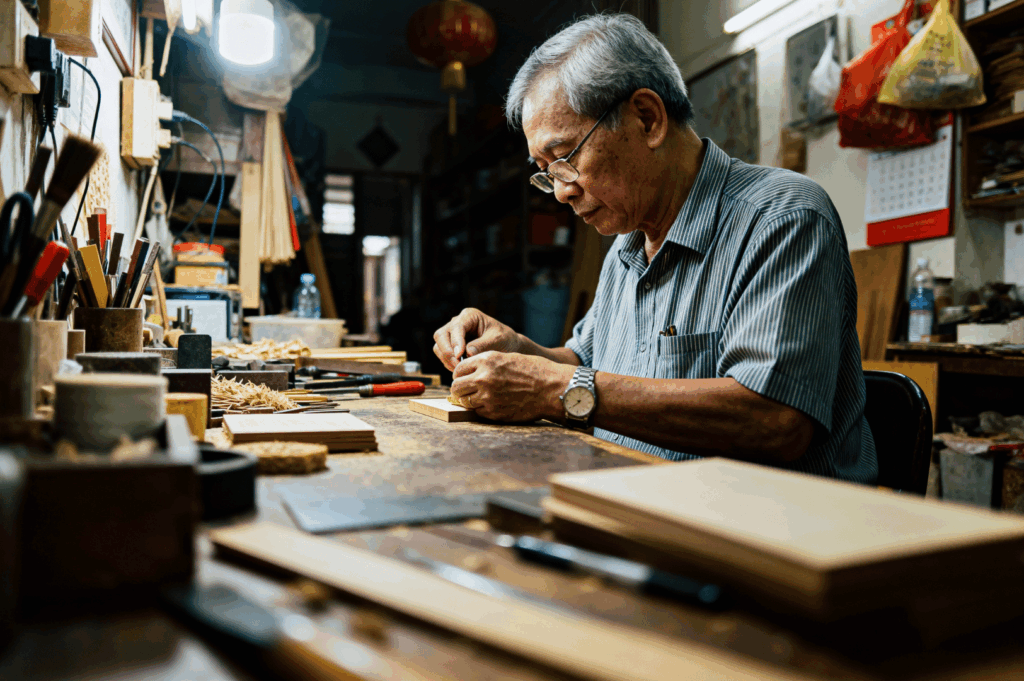
Embarking on a project to document traditional crafts in Singapore is not as simple as showing up with a camera. It is a journey filled with unique obstacles that test your skills as a photographer and your empathy as a person. Only a thoughtful and respectful approach works when trying to document such sensitive subjects.
Finding the Craftsmen
The first and greatest hurdle is simply locating these artisans. Many do not have a digital footprint; they exist in word-of-mouth networks and tucked-away workshops in older estates. It took weeks of searching, walking through old neighborhoods, and talking to shopkeepers before I found my first few subjects. Building trust is the next step. These are private individuals, and gaining access to their personal workspace requires patience, respect, and a genuine interest in their craft.
The selection of which craftsmen to photograph is a careful process; I must thoughtfully select individuals whose stories best represent the vanishing heritage.
Technical Challenges in Difficult Environments
The workshops of traditional craftsmen are rarely optimized for photography. They are often cramped, cluttered, and poorly lit. I frequently found myself working in tight spaces with mixed lighting sources, from a single harsh fluorescent bulb to dim, ambient light. Capturing the intricate details of a Nyonya beadwork pattern or the texture of hand-pulled noodles under these conditions is a significant technical test. While modern cameras and editing tools have made some aspects of photography easier, the unique challenges of these workshops still require skill and adaptability.
The Importance of Cultural Sensitivity
Cultural photography in Singapore requires a deep respect for tradition. Before I even lift my camera, I spend time observing and understanding the craft. Learning the significance of a particular tool or the meaning behind a calligraphic stroke is essential. A sensitive photographer always considers the cultural and emotional context of each subject before taking a photo. It is not my place to direct or interfere but to document authentically. Obtaining permission is not just a formality; it is about ensuring the person feels respected and comfortable throughout the process.
Balancing the Story of Craft and Craftsman
The most difficult challenge is achieving a storytelling balance. A successful image must capture not only the “how” of the craft but the “who” behind it. The goal is to create photographs that show both the delicate process of rattan weaving and the quiet pride in the weaver’s eyes. In each photograph, the subject is not just the craft itself, but the individual behind it, whose story and presence bring the image to life.
The Rewards of Preserving a Life Legacy
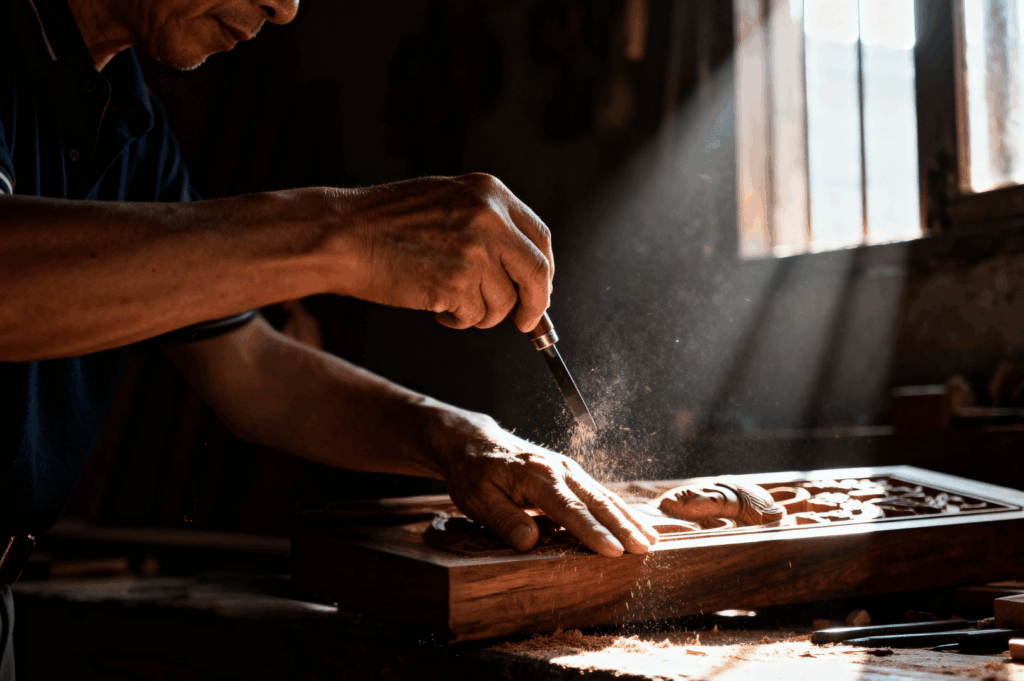
Despite the difficulties, the rewards of this documentary photography project are immeasurable. They extend far beyond just creating a collection of images and touch on personal growth and cultural contribution. I have truly enjoyed the process of connecting with Singapore’s heritage through photography.
Creating a Visual Archive for the Future
The primary reward is knowing that this work helps preserve a piece of history. These images will become a visual archive, a reference for students, historians, and future generations who will never get to see these masters at work. The growing number of photographs in this archive helps to document and organize the traditional crafts, making the collection more comprehensive and accessible. The photographs ensure that the knowledge and artistry of Singapore’s traditional craftsmen will not be completely lost.
Building Personal Connections
The time spent with these artisans has been one of the most fulfilling experiences of my life. I have had the privilege of listening to their life stories, hearing about Singapore in a bygone era, and learning directly from them. These are not just subjects; they have become mentors, and some have even become a friend.
Experiencing Artistic Growth
The challenging conditions have forced me to become a better photographer. I have learned to see and shape light in ways I never thought possible. My skills in composition, environmental portraiture, and visual storytelling have grown immensely. There have been times when I have returned to the same workshop or subject, reflecting on my previous attempts, in order to capture a better image and further refine my approach.
Making a Cultural Impact
Sharing these stories and photographs has an impact beyond the frame. It raises public awareness about the plight of these vanishing trades and the importance of heritage preservation. It is also important to share these photographs and stories with a wider audience, as doing so can inspire greater appreciation for Singapore’s heritage. I have received messages from young Singaporeans who were inspired to visit a craftsman after seeing a photo, and that is an incredible outcome.
Crafting Unique Photographs of Singapore
This journey has allowed me to create a body of work that is deeply personal and uniquely Singaporean. These are not the typical postcard shots but intimate portraits of the city’s soul. The resulting photographs of Singapore offer a different perspective, one that values quiet dedication and handmade beauty over modern spectacle. This project has resulted in a series of photographs that collectively tell the story of Singapore’s traditional craftsmen.
Behind-the-Scenes Stories
During one session, I was photographing one of the skilled men who make traditional Chinese seals in his tiny workshop, barely larger than a closet. After an hour of quietly shooting, he put down his tools, looked at me, and asked if I wanted to try. He guided my hand as I attempted to carve a simple line, giving me a profound, firsthand appreciation for the immense skill his work required.
Another memorable moment came while documenting a Peranakan Nyonya beadwork artist working on a pair of intricate beaded slippers. Her focus was absolute in the limited light of her workspace. I struggled to capture the tiny details with my camera, but she noticed and without a word, angled her work lamp just slightly, creating the perfect highlight on the beads. It was a silent, collaborative moment of shared artistic purpose, reflecting the delicate balance of craft and life in Singapore’s rich cultural tapestry.
Technical Tips for Aspiring Documentary Photographers
If you are inspired to start your own heritage documentation project, here are a few practical tips:
Technique: Learn to be a quiet observer and focus on capturing the hands, tools, and environment that tell the full story behind each craft. Use silent shutter mode if your camera has it to avoid disturbing the subject. Never use flash, as it disrupts the natural ambiance and mood of the frame. This process helps you capture authentic portraits and images that reflect the true essence of these craftsmen and their work.
Equipment: A fast prime lens (such as a 35mm f/1.4 or 50mm f/1.8) is essential for capturing detailed photographs of Singapore’s traditional craftsmen in low-light environments. This type of lens allows you to work without flash and is compact enough to be unobtrusive in limited spaces. A camera with excellent high-ISO performance is a major advantage for shooting in dimly lit workshops. Additionally, a modern phone can be a useful tool for capturing candid moments or quick reference shots while walking through the city’s streets and harbours.
Approach: Be patient and respectful when photographing these artisans. Visit their workshop without your camera first, buy something from them, introduce yourself, and explain your passion for documenting the unique life and crafts of Singapore. Building trust is more important than any equipment and helps reduce barriers to access.
Conclusion
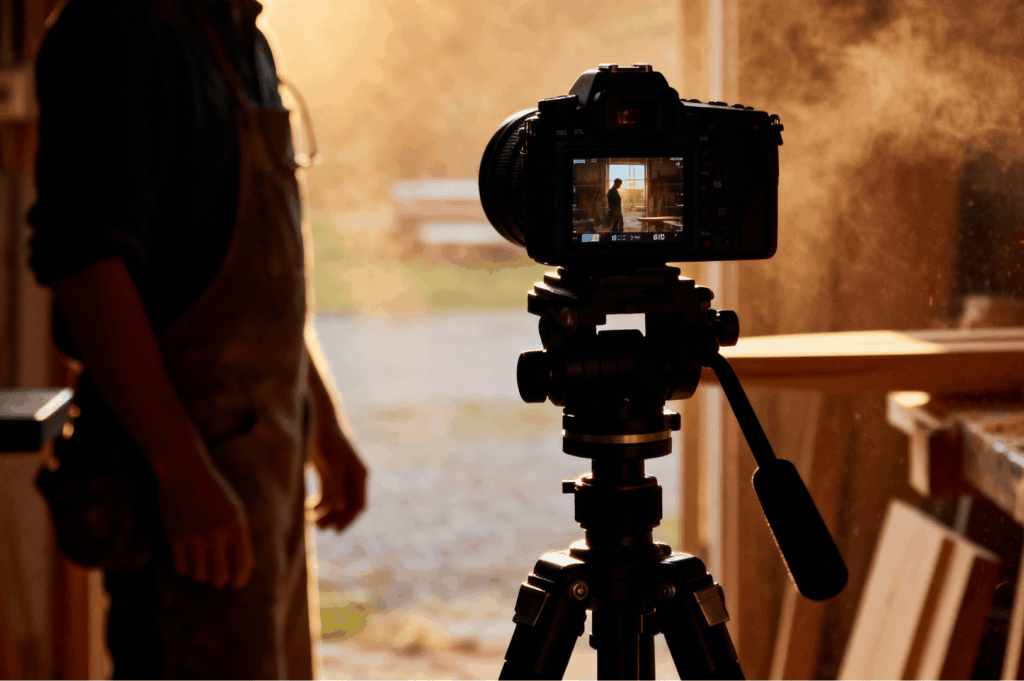
This photographic journey into the world of Singapore’s last traditional craftsmen has been the most challenging and rewarding work of my career as you can see in my adventures in SG Nomad Photographer. It is a constant reminder that photography can be more than just art; it can be an act of preservation. The experience has reshaped my understanding of what it means to create photographs of Singapore, embedding a sense of responsibility into my practice. That is why I chose to publish these pictures, allowing viewers from Singapore and beyond to reflect on the country’s heritage.
I encourage you to seek out these artisans. Visit their shops, buy their products, and listen to their stories. These pictures serve as a bridge between generations, helping families and individuals connect with Singapore’s past. Support the keepers of our heritage before it is too late. The soul of our nation is not just in its gleaming skyscrapers but in the skilled hands of these masters. Let us ensure their legacy endures.