
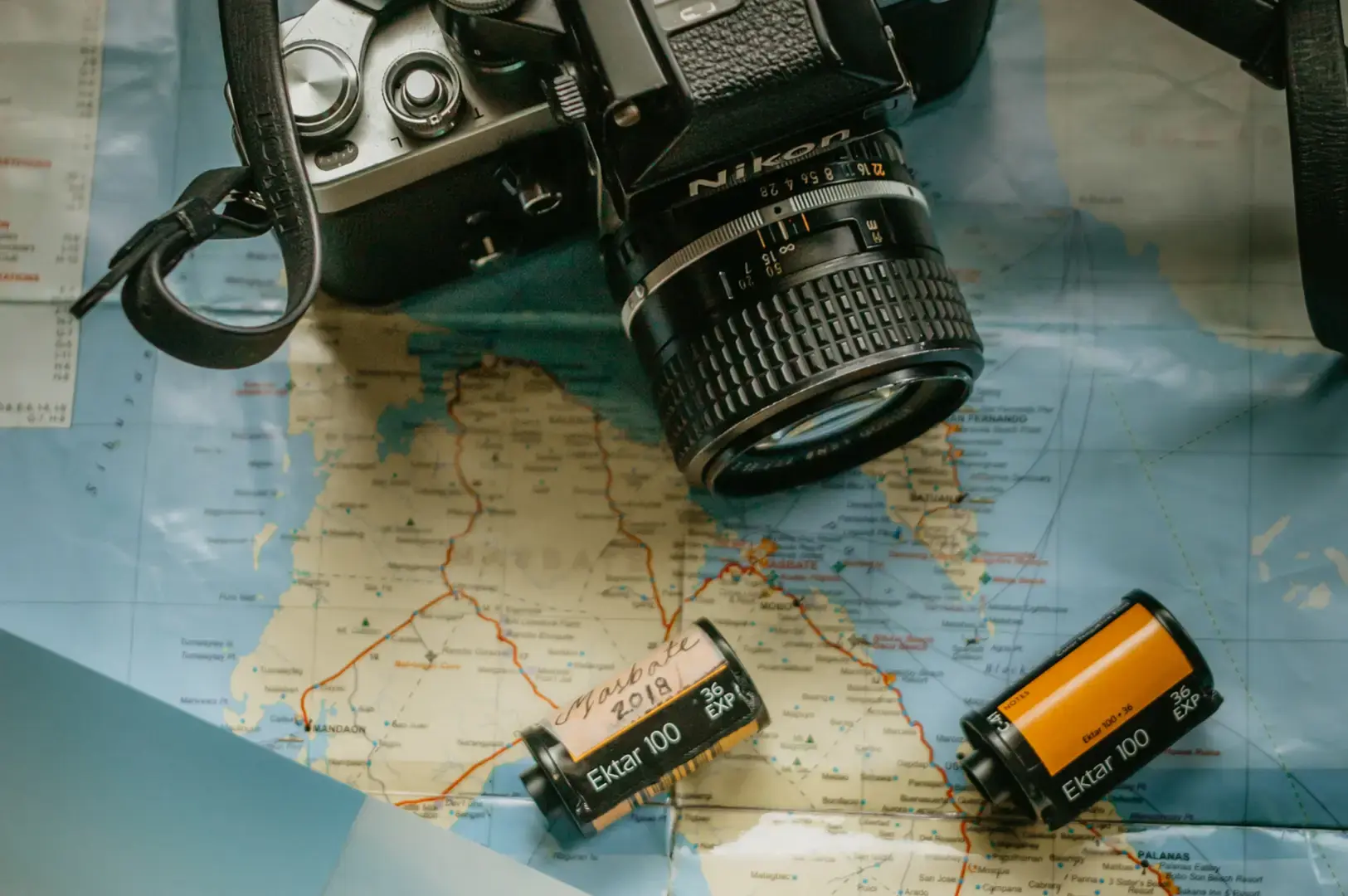
The first time I nearly lost a shoot before it began, I was standing at a boarding gate with a bag full of spare batteries in the wrong place.
Nothing dramatic happened. No alarm, no drama. Just a quiet moment of doubt when airport staff at a security checkpoint glanced at my roller bag and mentioned it might need to go into the hold. I remember the small cold feeling of realising I had packed my batteries the way I always had, without thinking too hard about it.
That moment taught me something. The rules around a battery on flight are not there to make our lives difficult. They exist for safety reasons because lithium can misbehave in ways that matter most inside an aircraft. So let me walk you through what I have learned, the way I would tell a friend over kopi before a trip.
Why Lithium Batteries And Electronic Devices Need Special Care
Lithium ion batteries store a lot of energy in a small space. That is exactly why they power so many portable electronic devices, from mirrorless cameras and mobile phones to laptop computers, drones, and other electronic equipment.
When a cell is damaged, overheated, or faulty, it can enter thermal runaway. It heats itself and can lead to lithium battery fires. That fire risk explains why spare batteries must be carried where cabin crew or flight crew can detect a problem quickly.
The International Air Transport Association, or IATA, and aviation regulators distinguish between batteries installed in personal electronic devices and loose spares. Spare lithium ion and lithium metal batteries generally belong in the aircraft cabin rather than checked baggage.
The Watt-Hours (Wh) Numbers That Decide Everything
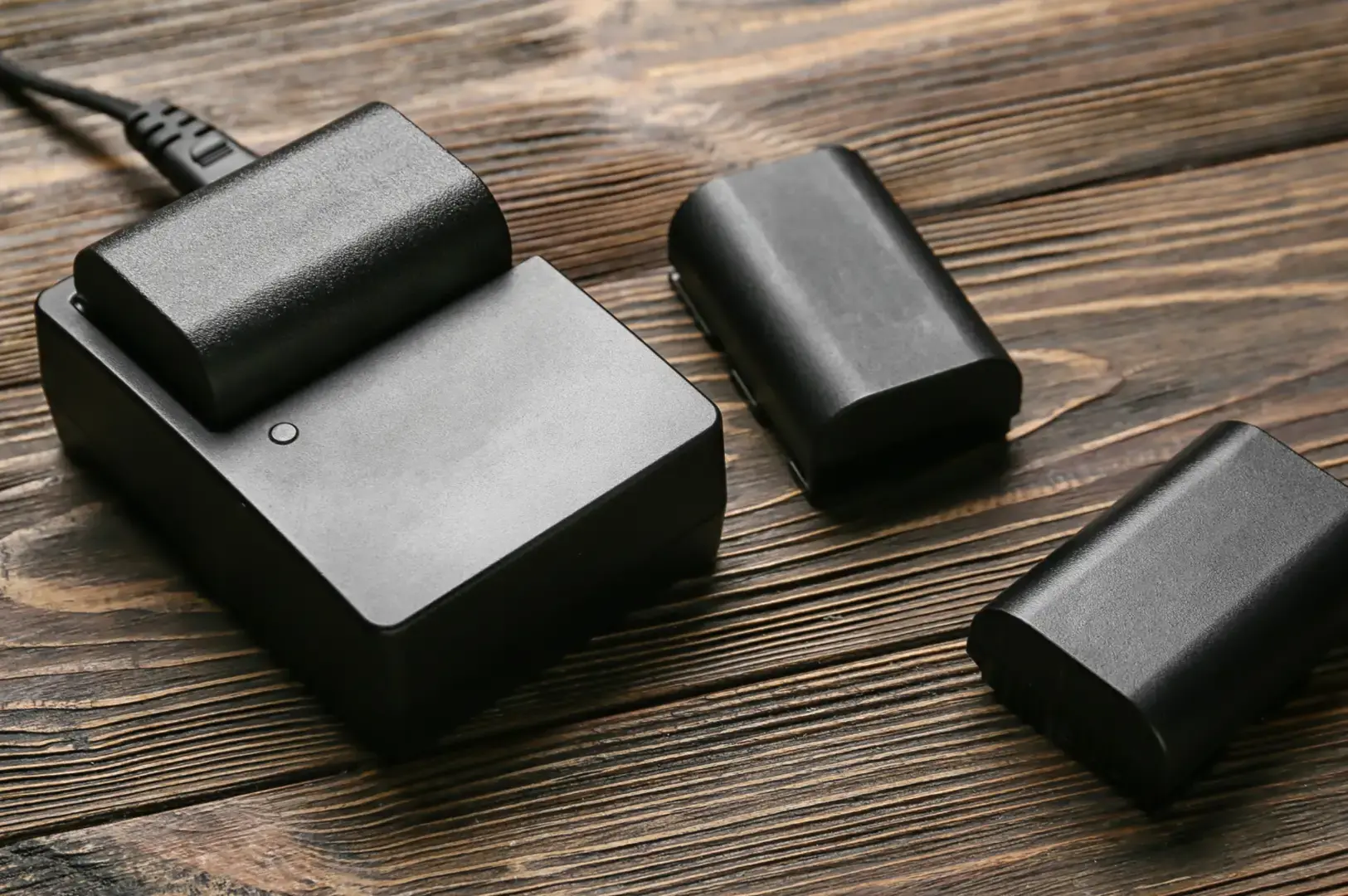
Everything comes down to watt-hours, or Wh. The Wh rating tells an airline how much energy a battery holds and places most photography batteries into one of three groups.
- Batteries up to 100Wh cover most camera batteries. Spare batteries in this range may generally travel in carry on baggage without prior airline approval, provided the battery terminals are protected.
- Batteries above 100Wh but no more than 160Wh normally need airline approval before travel, with quantity limits applying to larger batteries. CAAS allows no more than two individually protected spares in this range.
- Anything above 160Wh is strictly prohibited as ordinary passenger baggage under these rules.
Lithium metal batteries use lithium content rather than Wh as an important limit. CAAS permits ordinary spare lithium metal batteries containing no more than 2g of lithium, while larger quantities fall under tighter restrictions.
How To Read Your Own Battery Powered Devices
Sometimes the Wh rating is printed directly on a battery. When it is not:
Wh = V x Ah
If capacity is listed in milliamp hours (mAh), divide by 1,000 first.
A battery marked 7.2V and 2,000mAh becomes 2Ah. Multiply 7.2 by 2 and you get 14.4Wh.
A Sony NP-FZ100, for perspective, is rated at 16.4Wh, while a DJI Mini 4 Pro flight battery is around 18.96Wh. Most mirrorless and DSLR shooters therefore carry batteries comfortably below 100Wh.
Ethan’s Insight: Think in Wh, never in mAh alone. When someone asks whether a lithium ion battery on a plane is allowed onboard, the useful question is: what is its Wh rating?
Carry-On Baggage Versus Checked Baggage
This is the distinction that trips people up. A battery installed inside a camera, laptop, or another portable electronic device may sometimes travel in checked baggage if airline rules permit it and the device is completely switched off and protected from accidental activation.
Loose spare lithium batteries are different. They must be carried in cabin baggage. Power banks are treated as spare batteries too. Singapore Airlines specifically states that spare lithium batteries are not permitted in checked in baggage.
The Federal Aviation Administration gives the same practical rule for US travel: spare lithium ion batteries, lithium metal batteries, and power banks belong in a carry-on bag. If that carry-on is checked at the gate, the spares must be removed and kept with the passenger.
Ethan’s Insight: That means if your camera roller is suddenly taken at check-in or at the gate, remove the battery pouch first.
If you are still building your travel kit, our guide to choosing a camera for Singapore travel photography may help before you start worrying about what goes into the bag.
The 2026 Singapore Cabin Baggage Rule You Cannot Ignore
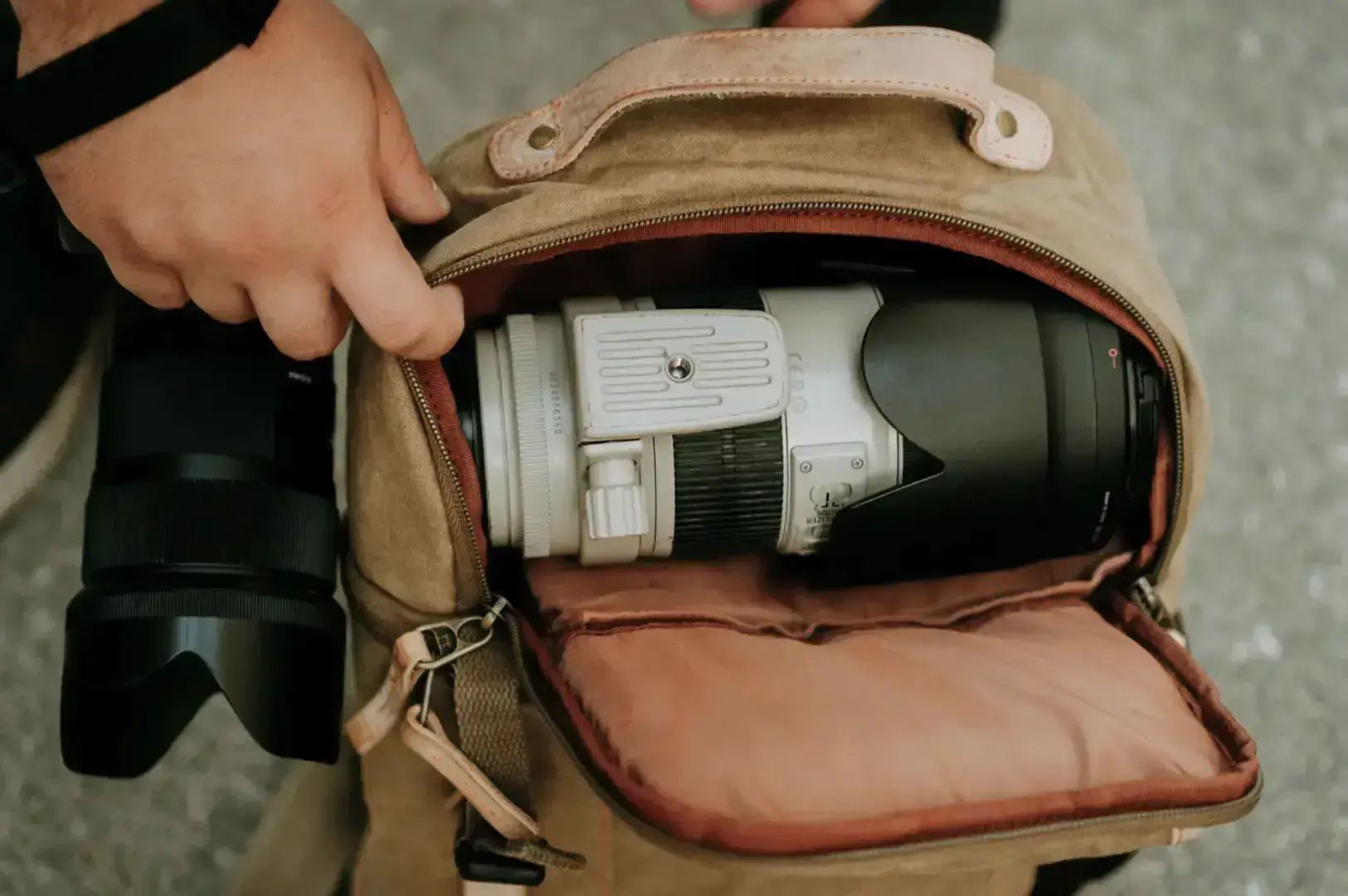
From 15 April 2026, passengers travelling from Singapore may carry a maximum of two power banks per person. Singapore Airlines adds that power banks and spare batteries should remain easily accessible, such as under the seat or in a seat-back pocket. Power banks should not be stored in overhead compartments.
Two power banks does not mean two camera batteries. Singapore Airlines currently permits up to 20 spare batteries at or below 100Wh, subject to its conditions, while maintaining the separate two-power-bank cap.
Ethan’s Insight: Charge everything before leaving home. Camera, cell phones, laptop computers, and anything else you need for the first shooting day should start full.
Another thing: Loose batteries and metal do not belong together. Keys, coins, camera plates, and other conductive objects can bridge battery terminals and create a short circuit. Keep every spare in its original packaging, an individual plastic bag, protective pouch or protective case. Exposed terminals can also be insulated with tape.
I keep my batteries near the top of the bag. That matters when a camera bag unexpectedly becomes checked in baggage.
Check-In Rules For Larger Batteries
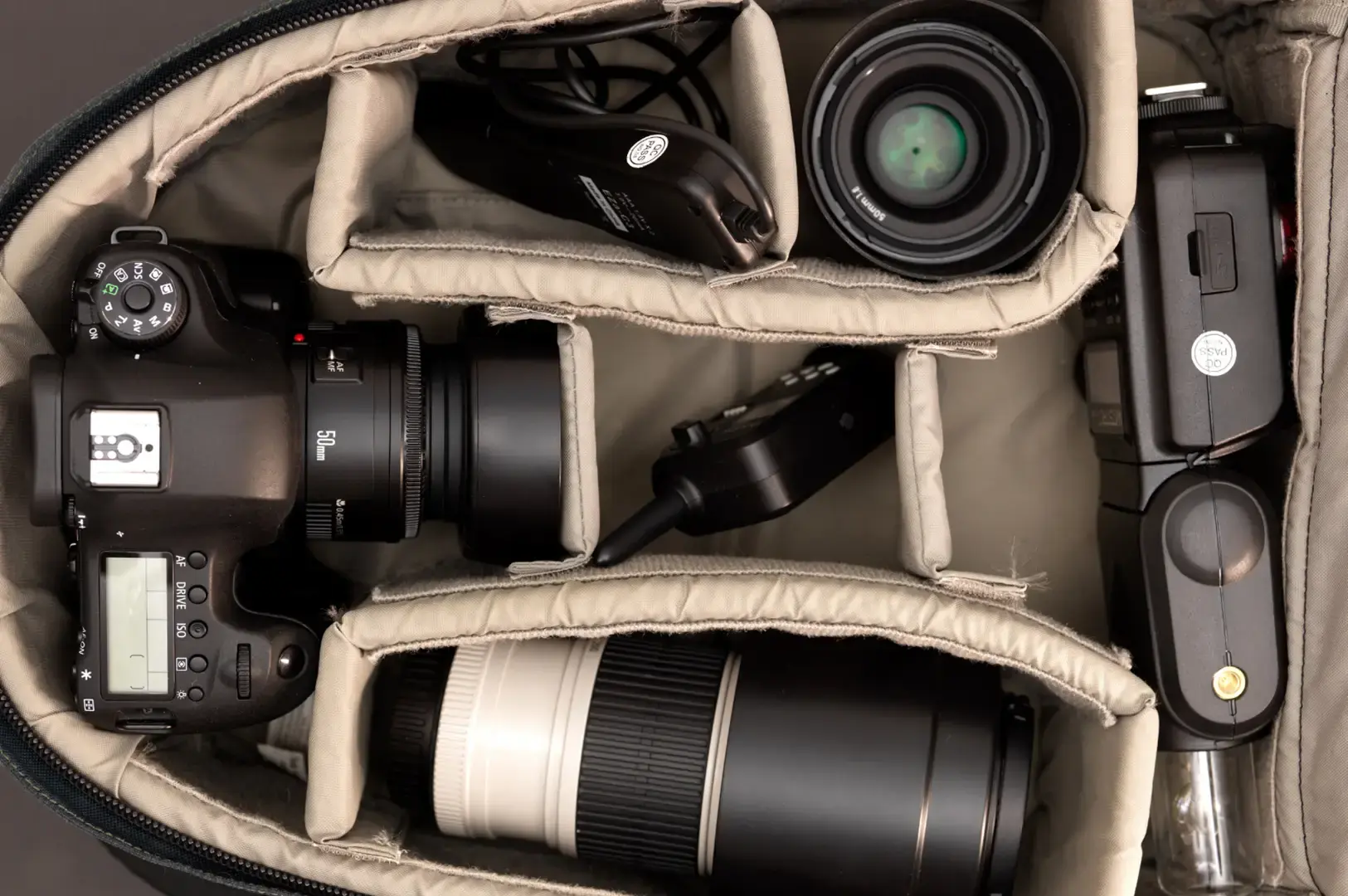
If your photography is moving towards larger video systems and professional equipment, becoming a professional photographer involves understanding the specific demands of professional gear. This includes handling larger batteries safely, complying with airline regulations, and preparing for the increased logistical challenges that come with professional-level equipment.
A photographer carrying a 150Wh professional video battery is dealing with a different category from someone carrying four small mirrorless batteries. Anything over 100Wh and up to 160Wh should be cleared with the airline before you reach security screening. Singapore Airlines currently requires prior approval and documentary proof for qualifying batteries in this category showing compliance with applicable test requirements in the UN Manual of Tests and Criteria, Part III, subsection 38.3.
That is where the passenger’s responsibility matters. Do not assume every airline applies identical local regulations or approval procedures.
Hong Kong SAR, Transit Rules, And Local Regulations
A battery may be acceptable at Changi and still face additional conditions elsewhere.
For flights involving the United States, check both Federal Aviation Administration (FAA) guidance and Transportation Security Administration (TSA) requirements, since airport security may also involve additional screening of electronic devices or other prohibited items.
Passengers travelling through Hong Kong SAR or another transit point should check the operating airline and local regulations for every leg. Rules around power banks, smart bags, lithium batteries, and onboard use can differ.
That is why I would never treat an old packing list as permanent. Check again before departure, especially when carrying larger batteries or unusual electronic equipment.
FAQs: Powered, Packed, & Explained
What should I do if my lithium battery overheats during a flight? If you notice your lithium battery or device overheating, smoking, or sparking during a flight, immediately notify the flight crew. Flight attendants are trained to handle such incidents and will take appropriate safety measures to contain the situation.
What are non-spillable batteries and are they allowed on flights? Non-spillable batteries, such as sealed lead-acid batteries, are designed to prevent leakage and are generally allowed on flights under specific conditions. They must be properly protected and usually carried in cabin baggage. Always check with your airline for their specific rules regarding these batteries.
Where can I find further information about airline-specific battery regulations? For the most accurate and up-to-date information, consult your airline’s official website or contact their customer service directly. Aviation authorities like the International Air Transport Association (IATA) and Civil Aviation Authority of Singapore (CAAS) also provide detailed guidelines on traveling with lithium batteries.
Your Pre-Flight Checklist
- List every battery-powered device.
- Find the Wh rating.
- Flag anything above 100Wh for airline approval.
- Put spare lithium batteries and power banks in cabin baggage.
- Protect every terminal against short circuit.
- Check for damaged or recalled batteries.
- Keep Singapore departures to two power banks.
- Keep the battery pouch accessible in case your carry on becomes checked baggage.
Then check your airline again before leaving for the airport.
The rules can change. The April 2026 Singapore update is proof enough. The useful habit does not: know what batteries you are carrying, pack them where they belong, and let the shoot begin without that cold moment at the gate.