
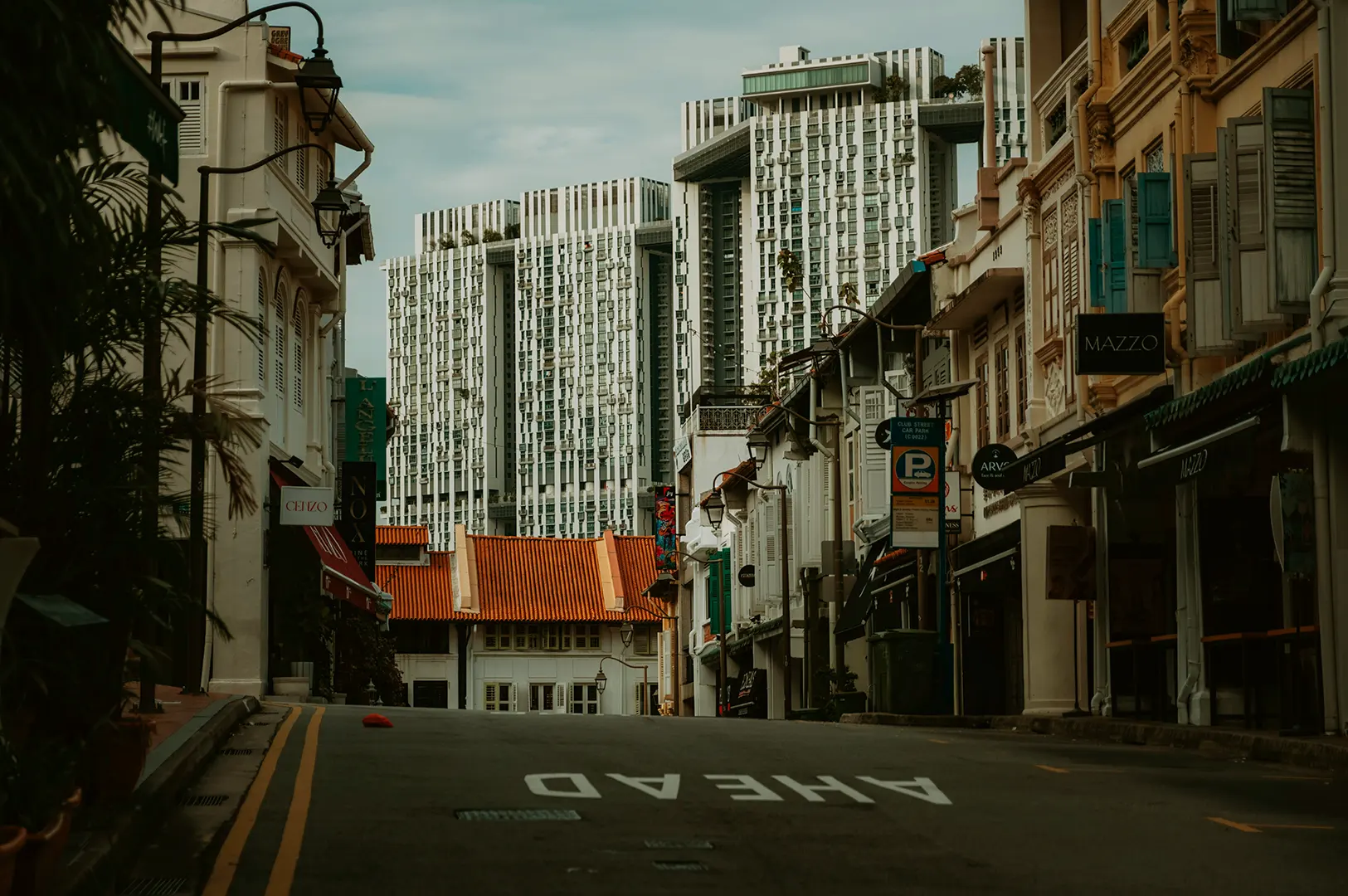
Singapore is often photographed from above.
Marina Bay Sands at blue hour. The skyline sharpened by rain. Gardens lit carefully enough to resemble a rendering before it resembles a city. We have become very good at photographing the parts of Singapore that already know they are being seen. But the city reveals itself differently in the corners it forgets.
The back alley behind the kopitiam after lunch rush. The corridor where fluorescent light flickers against aging tiles. The quiet stretch beneath an MRT track where no one pauses long enough to notice how evening settles there. These places rarely make postcards. That is precisely why they matter.
Photography, at its best, is not an act of collecting landmarks. It is an act of attention. And attention changes when you leave the obvious behind. The frame becomes slower. More observant. Less interested in spectacle.
In forgotten corners, Singapore stops performing its efficiency.
You begin to see wear instead of polish. Texture instead of design. Small negotiations between old and new happening without announcement—a weathered provision shop beside a freshly painted café, or a faded signboard surviving another year beneath condominium shadows.
These spaces carry memory differently.
Not loudly.
But persistently.
Technically, these corners demand a different kind of photographer too. Light is uneven here. Reflections are imperfect. Shadows arrive early and stay longer. You cannot rely on symmetry or grandeur to carry the image. You have to work with restraint. With patience. You wait for the right interruption: a bicycle crossing the frame, steam escaping from a kitchen door, a solitary figure pausing beneath fluorescent light.
And suddenly, the city feels human again.
I think that is what draws me back to these overlooked places. They remind me Singapore is not only defined by what it builds, but also by what it quietly leaves behind. Some photographs document progress.
Others document presence.
I find myself trusting the second kind more. I sigh to myself, this is what it feels like to be a nomad photographer.