
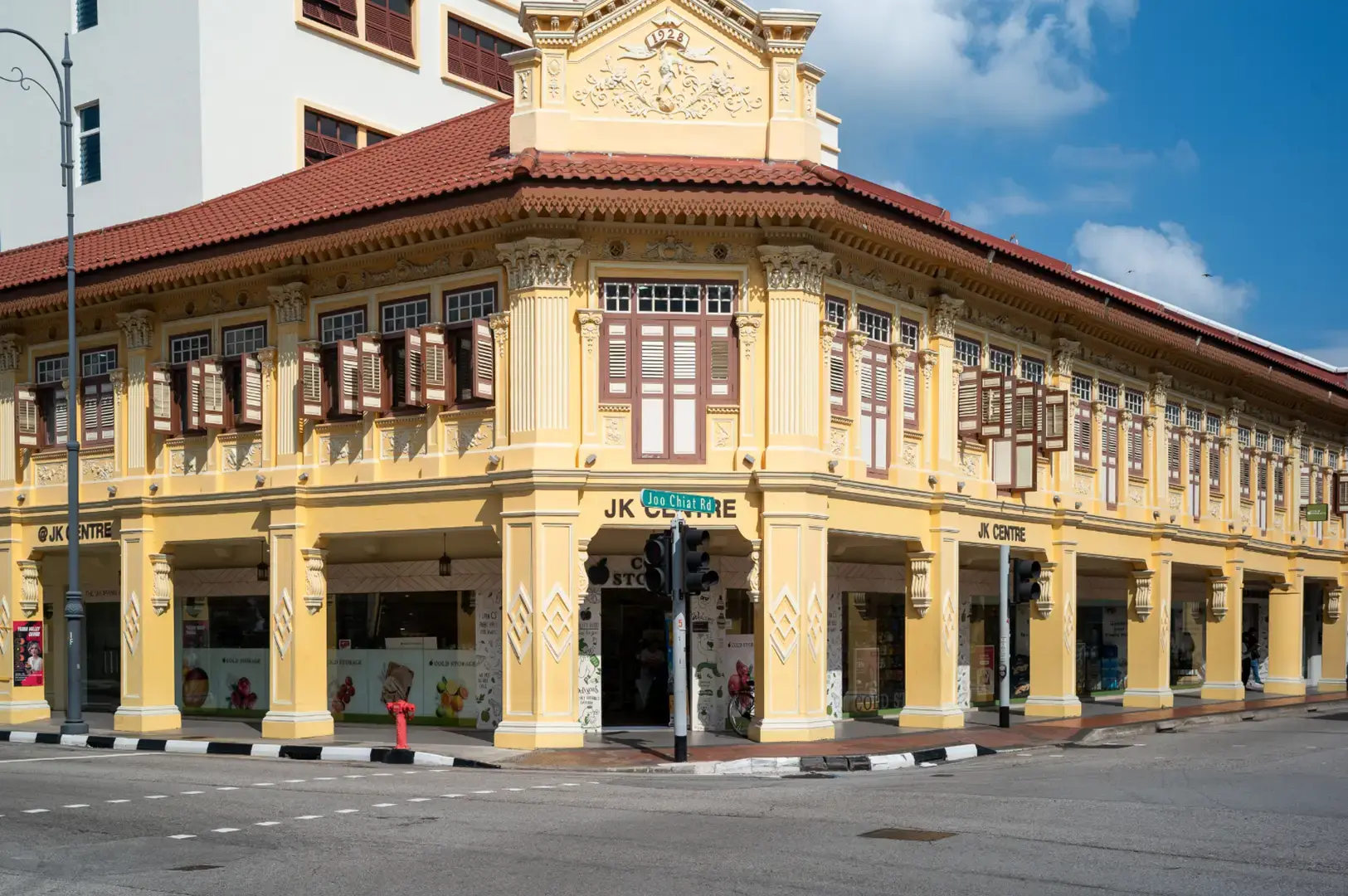
A heritage building doesn’t have to disappear for a photograph of it to become historical. The structure can stay while everything around it shifts: traffic, businesses, skylines, purpose.
That’s what “before they change” means here. None of these places is about to vanish. Several are National Monuments. What changes is the context, and a photograph can hold that relationship at one particular moment.
1. Fort Siloso: A National Monument Built Into the Landscape
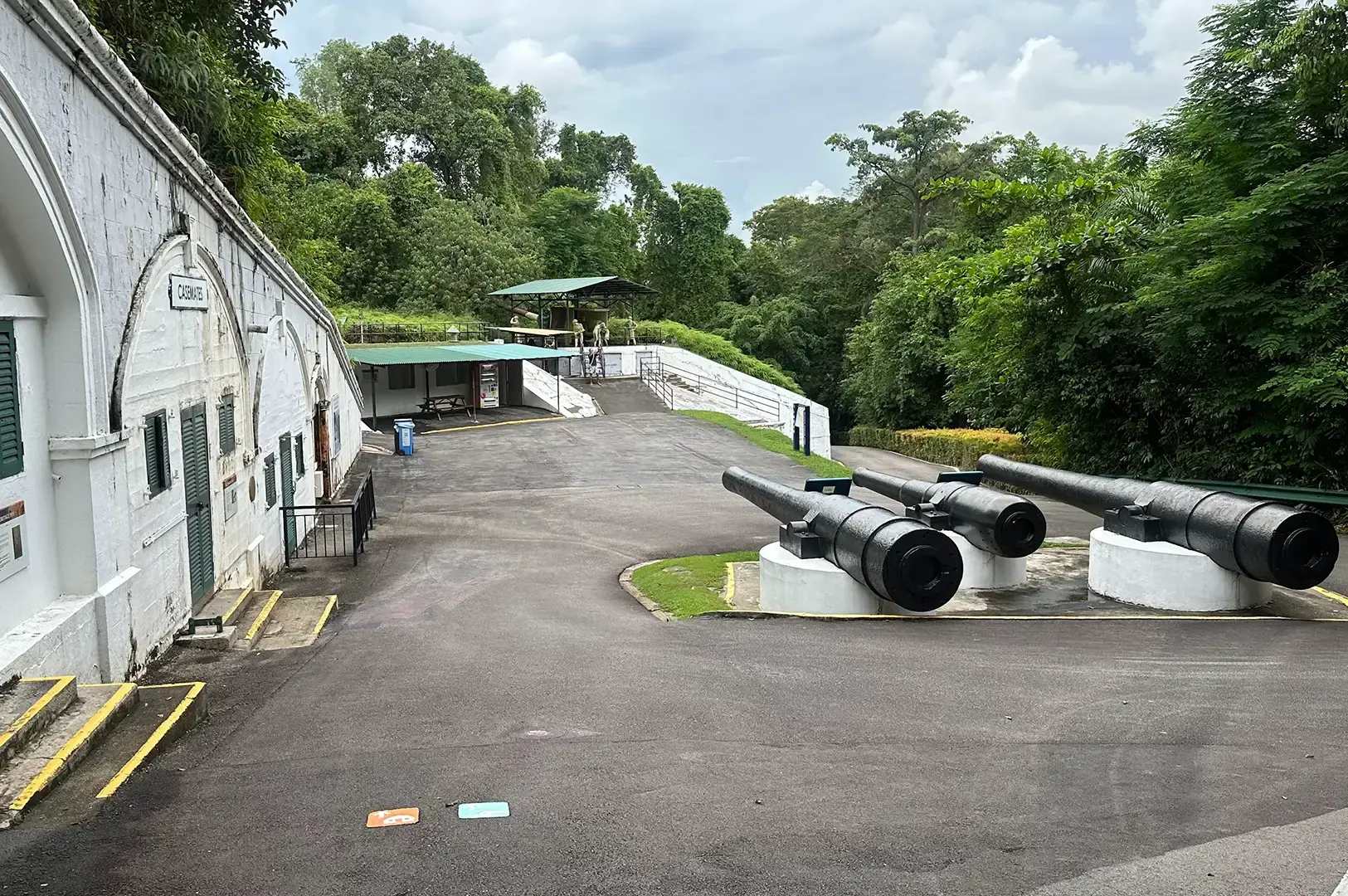
Construction began in 1878 as part of Singapore’s British coastal defense network. Fort Siloso remains Singapore’s most intact fortification, gazetted as a National Monument on 15 February 2022. Gun emplacements, casemates, and tunnel complexes survive alongside the island’s tropical vegetation.
The temptation during a visit is to photograph the guns as museum pieces. What interests me more is how the island has grown back around them. Military geometry repeating under tropical leaves. Tunnels that bring low light demanding real attention rather than a single default setting.
Field Notes: Siloso Road, Singapore 099981 | Fort Siloso and Surrender Chambers: free entry, 10am to 6pm, last entry 5.30pm | Sentosa Beach Shuttle to Siloso Point.
[IMAGE PLACEHOLDER: Gun emplacement or casemate at Fort Siloso, partly framed by dense tropical vegetation, showing military geometry and present island greenery sharing the same space.]
2. Former Ford Factory: A World War II Turning Point in Bukit Timah
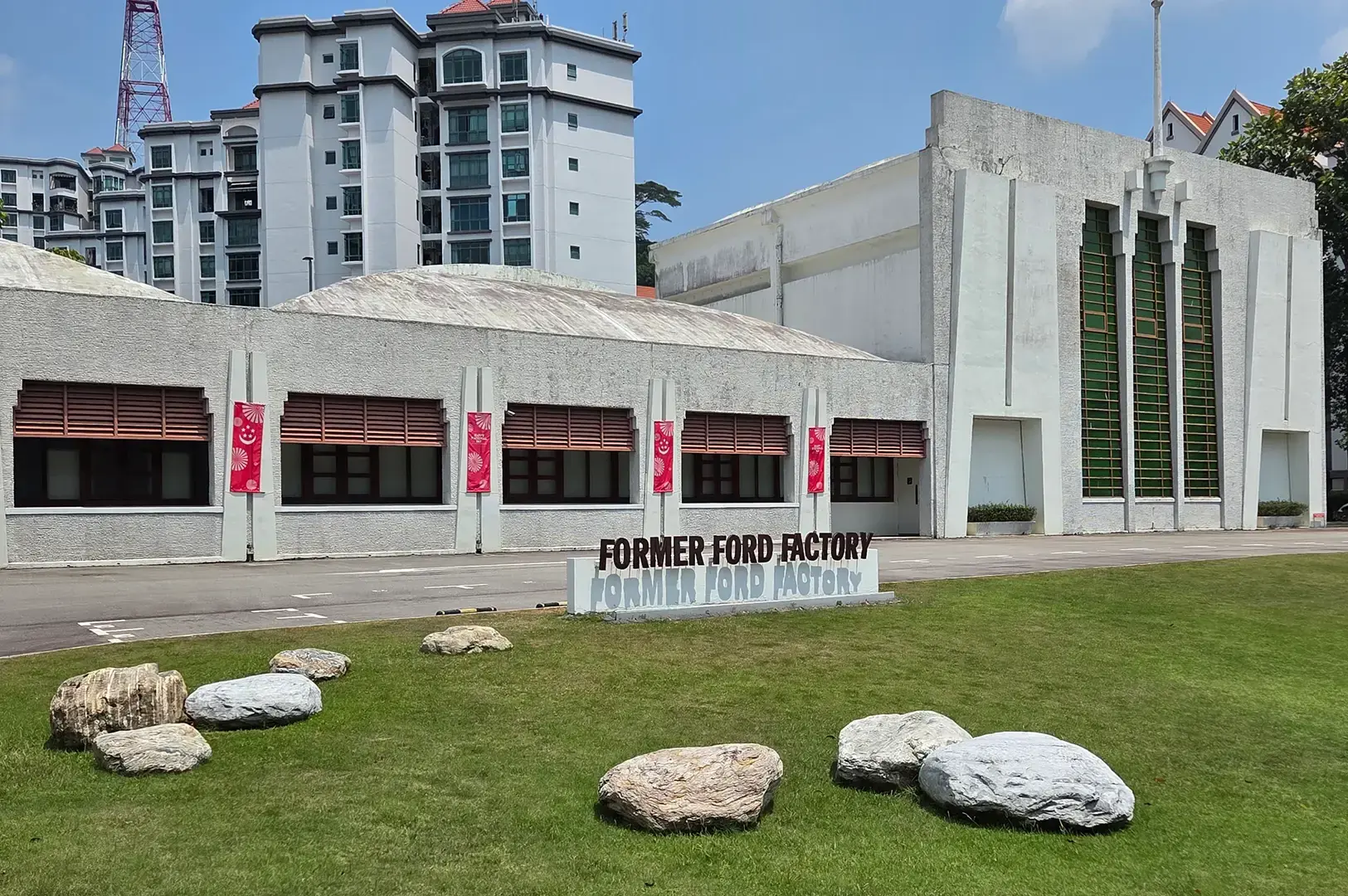
Completed in 1941 as Ford’s first Southeast Asian assembly plant, this is where British forces surrendered Singapore to the Japanese on 15 February 1942, where Singapore began to be occupied until 1945. Gazetted as a National Monument in 2006, its Art Deco façade features large green-glazed windows and stepped openings.
This Former Ford Factory asks for a slower approach. Your intention matters. A level, quiet frame that gives the building room along Upper Bukit Timah Road often says more than a dramatic angle. Inside, non-flash photography is allowed; flash and videography are not.
Field Notes : 351 Upper Bukit Timah Road | Tue to Sun, 9am to 5.30pm | Free for Singapore Citizens and PRs; S$7.13 after GST for foreign visitors | Free guided tours led by volunteers run on weekends (20 places, first-come) | Hume MRT Exit 1, three minutes uphill.
[IMAGE PLACEHOLDER: Former Ford Factory façade showing Art Deco symmetry, stepped entrance and green-glazed windows, with surrounding road providing present-day context.]
3. Hill Street’s Heritage Building: From Police Barracks to Civic Landmark
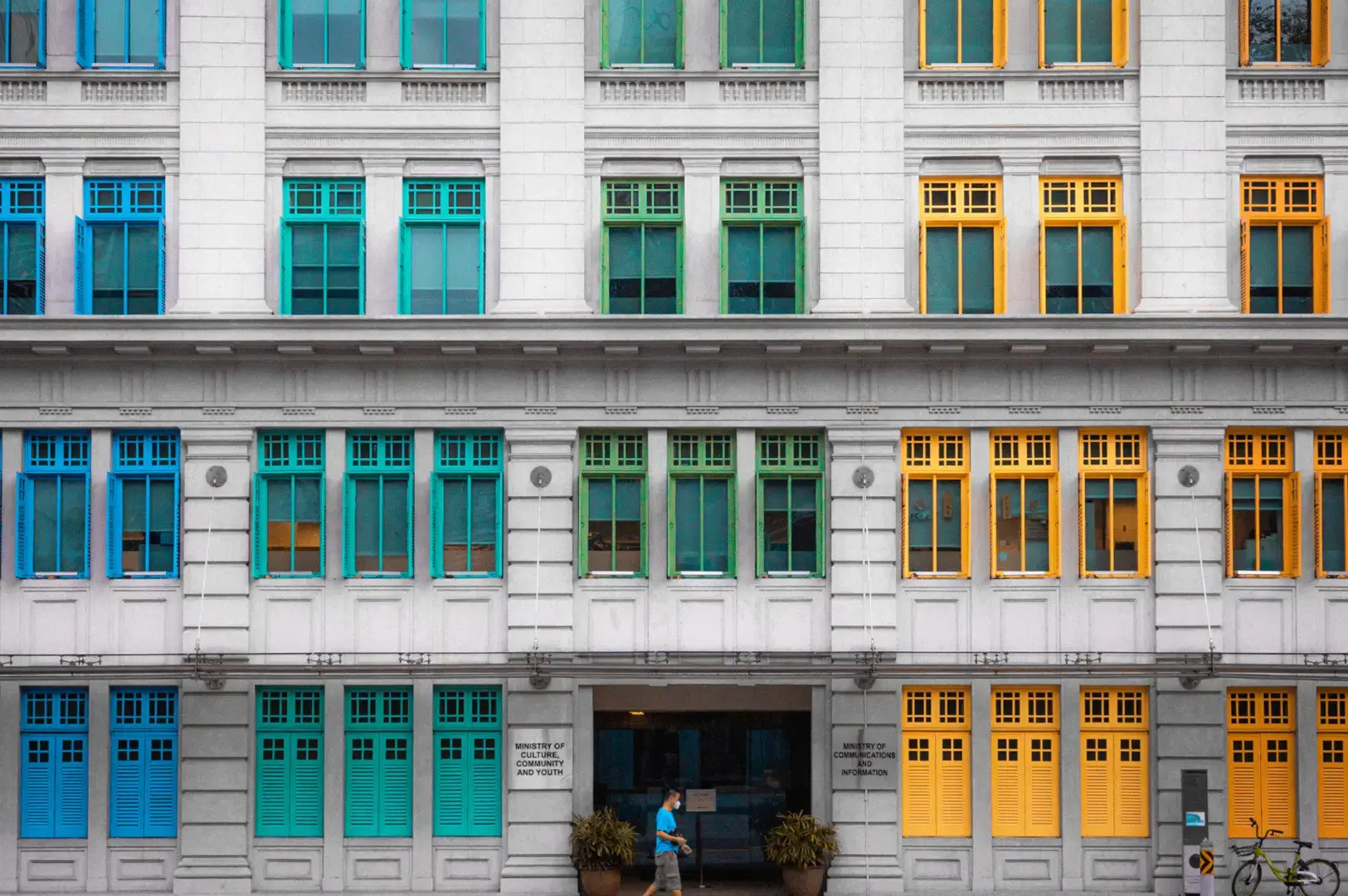
Completed in 1934, Hill Street’s Heritage Building held Hill Street Police Station, barracks, and family accommodation for the Singapore Police Force, an institution whose history stretches back to 1820. In its past it helped police the central area, including the streets around Chinatown. During the Japanese Occupation it was painted brown as camouflage. Later, as the city’s culture and development shifted, it transitioned from policing to government office use. Now a National Monument housing government ministries, its 927 windows have been painted in rainbow colors.
That’s the obvious photograph, and it’s been made many times. Let the repetition of windows fill part of the frame instead. Let traffic cut across the foreground. This is urban photography in its truest sense: an old civic building inside a busy modern corridor. Check MDDI‘s current guidelines before any organised or commercial shoot.
Field Notes: 140 Hill Street | Nearest MRT: City Hall or Clarke Quay.
[IMAGE PLACEHOLDER: Old Hill Street Police Station showing rows of colored windows with moving traffic or pedestrians in the foreground, placing the 1934 building inside present-day Singapore.]
4. Bukit Timah Railway Station: Heritage Buildings Without the Trains
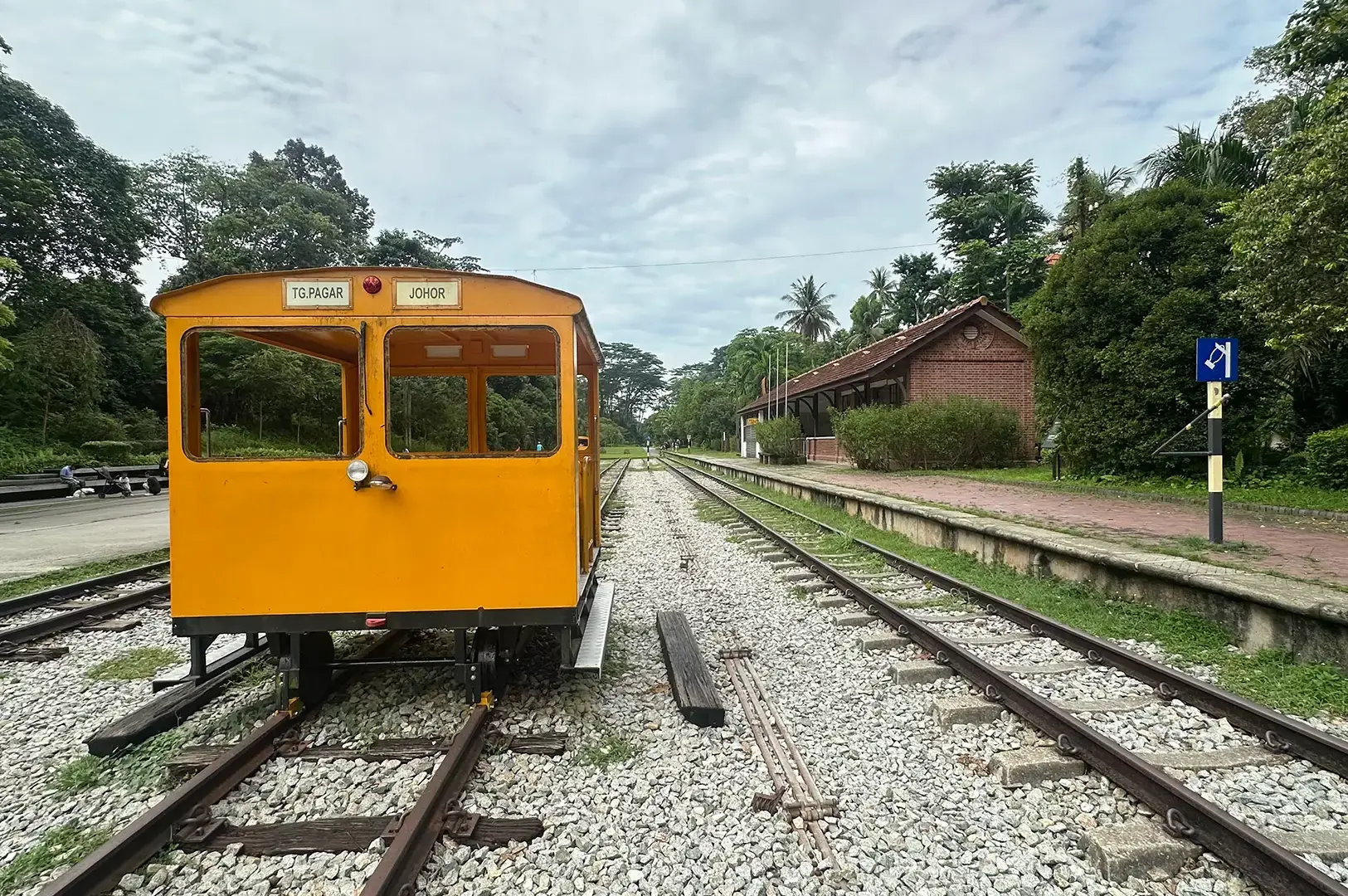
Built in 1932, Bukit Timah Railway Station is one of two surviving railway stations in Singapore. The railway was once part of the line connecting Singapore northwards through the Malay Peninsula, giving the station a history tied to movement well beyond the island and into what is now Malaysia. Restored and repurposed as a heritage gallery, the community node that opened in July 2022 preserves track switching levers, a ticketing booth, signals diagram, station signs, and token poles.
Heritage photography doesn’t need monuments. A single lever can carry more history than a wide shot of the whole station. Tracks give you leading lines. Vegetation gives you the present. The lack of trains is itself what you’re documenting.
Field Notes: King Albert Park MRT Exit A, five minutes along Bukit Timah Road | No carpark | Rail Corridor open 24/7 but unlit at night; leave before dark | The station itself remains open despite ongoing southern Rail Corridor works since March 2026.
[IMAGE PLACEHOLDER: Eye-level composition using railway tracks as leading lines toward the restored 1932 station, with surrounding greenery showing both transport heritage and present ecological setting.]
5. Joo Chiat Heritage Buildings: Photograph the Street, Not Just the Façades
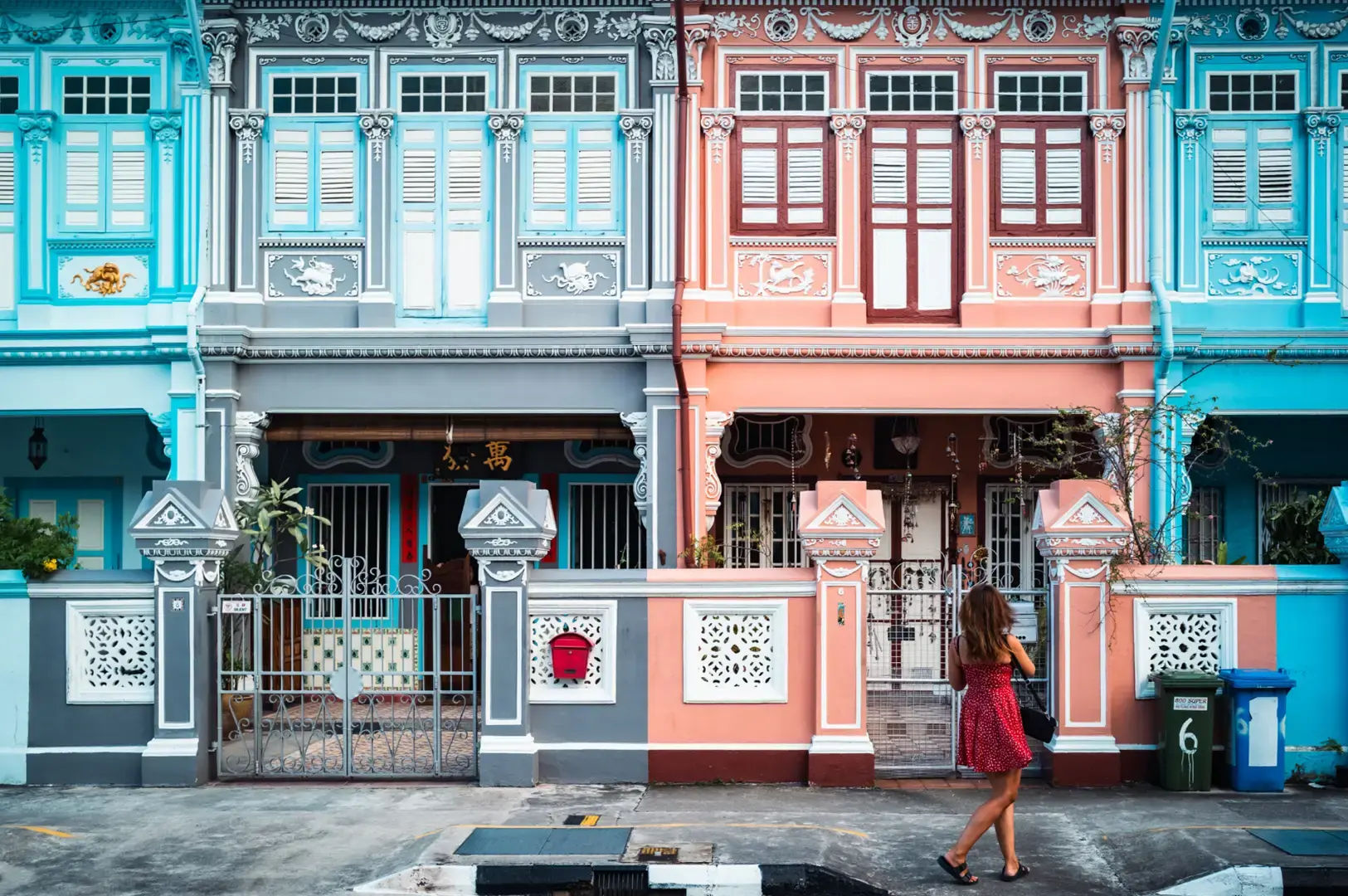
Joo Chiat Heritage Buildings is a URA Conservation Area and Singapore’s first Heritage Town since 2011. The precinct reflects the stories of several communities—Chinese, Malay, Peranakan, Eurasian—and their layered culture and architectural influences. Locals still live and work here, which is part of why it’s worth taking time to explore beyond the obvious. Not every colorful shophouse is “Peranakan” architecture, and the façade-portrait photograph is only one layer. Homes, shops, cafés, and restaurants all sit within the same streetscape as conserved façades, which is precisely why the neighbourhood should be photographed as a living, lived-in place.
Look for gates, shutters, tiles, traffic, a parked bicycle, a resident walking home. Street captures work best when you alternate distance: an establishing scene, a medium architectural frame, a close detail. If you’re working out what to carry, I’ve written about choosing a first street-photography lens for Singapore. These are homes. Stay on the public street.
Field Notes: Joo Chiat Road and surrounding streets | Quieter residential streets beyond Joo Chiat Road, including Chapel Road | Accessible by bus and MRT to nearby Paya Lebar or Dakota.
[IMAGE PLACEHOLDER: Conserved Joo Chiat shophouses with present-day neighborhood activity — pedestrians, parked bicycles or road traffic — showing the heritage value is in the living streetscape, not color alone.]
6. Cavenagh Bridge: River Heritage Against the Modern City
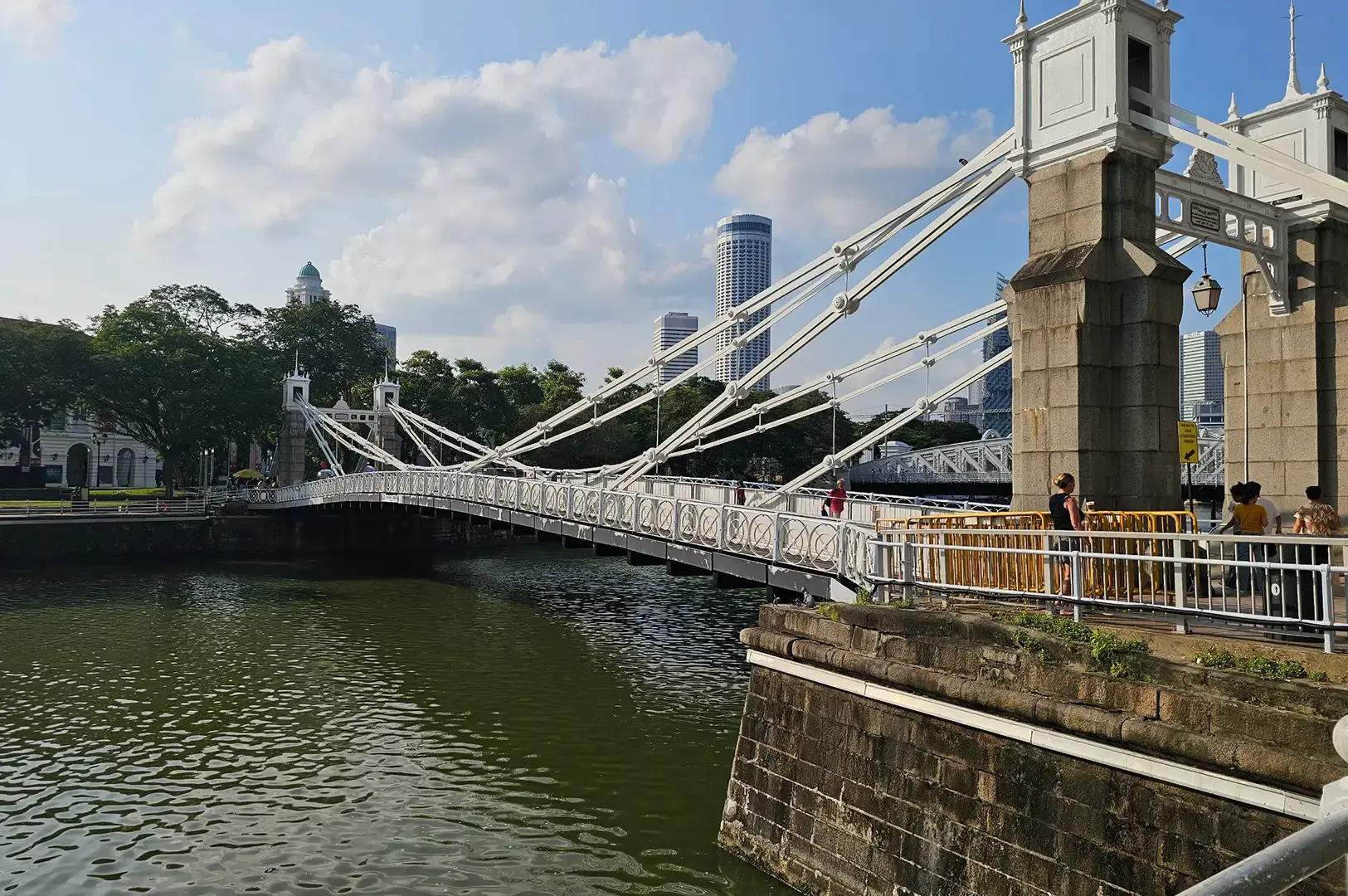
Opened in 1869, Cavenagh Bridge is the oldest surviving suspension bridge across the Singapore River. Manufactured by P & W MacLellan of Glasgow and connected in engineering history to London-based consultant Rowland Mason Ordish, it was retained for pedestrian use once newer crossings were built. It was gazetted as a National Monument in October 2019, alongside Anderson and Elgin Bridges.
The bridge stays. The river around it keeps gaining new layers. Try it from the riverbank. Golden hour separates ironwork from background. Low light rewrites the relationship between bridge, reflections, and skyline. Same structure, different photograph each time.
Field Notes: Raffles Place MRT nearby | Pedestrian-only bridge | Best accessed from the Fullerton and Empress Place riverbanks | Open public crossing | Easy to photograph from both bridge level and the Singapore River promenade.
[IMAGE PLACEHOLDER: Cavenagh Bridge with historic ironwork prominent in the foreground and contemporary city buildings visible beyond, placing nineteenth-century infrastructure and modern Singapore in the same frame.]
A Few Working Notes
My own work documenting photographs of Singapore’s traditional craftsmen reinforced one idea: the room around a subject tells as much as the subject itself. You discover that in the details: a glimpse of tools on a shelf, the memories embedded in a worn surface. It applies here too.
- Show the context, not just the landmark.
- Alternate wide, medium, and close. Not a formula, a habit.
- Let people and traffic show the present.
- Return when the light changes.
- Small evidence (tracks, windows, signs, doors) often explains history more clearly than a dramatic wide shot.
What Stays in the Frame
The strongest heritage photographs record relationships. A bridge and a skyline. A station and its closing vegetation. A fort on an island now used very differently. A row of conserved houses and the people still passing through, whether on an ordinary day or during the events that mark a neighbourhood’s life. Some of the sights and structures listed here predate Singapore’s independence by decades, yet they continue to sit inside the rhythms of the present city.
For some, these are familiar sights, but familiarity is exactly why it helps to slow down and look again: each trip back produces a different frame precisely because the context keeps shifting. Singapore photographers were already recording a changing city long before any of us arrived with digital cameras. G. R. Lambert & Co., which once had a studio on Orchard Road, produced photographs of Singapore into the First World War era. The equipment changes. The instinct to preserve what a city looks like at a particular moment does not.
And perhaps that is what I would carry away from these six places. Before raising the camera, give yourself a minute to see what the old structure is sharing the frame with, because the point of heritage photography isn’t simply to prove that something old still exists. It’s to notice the relationship between what has stayed and what has changed.