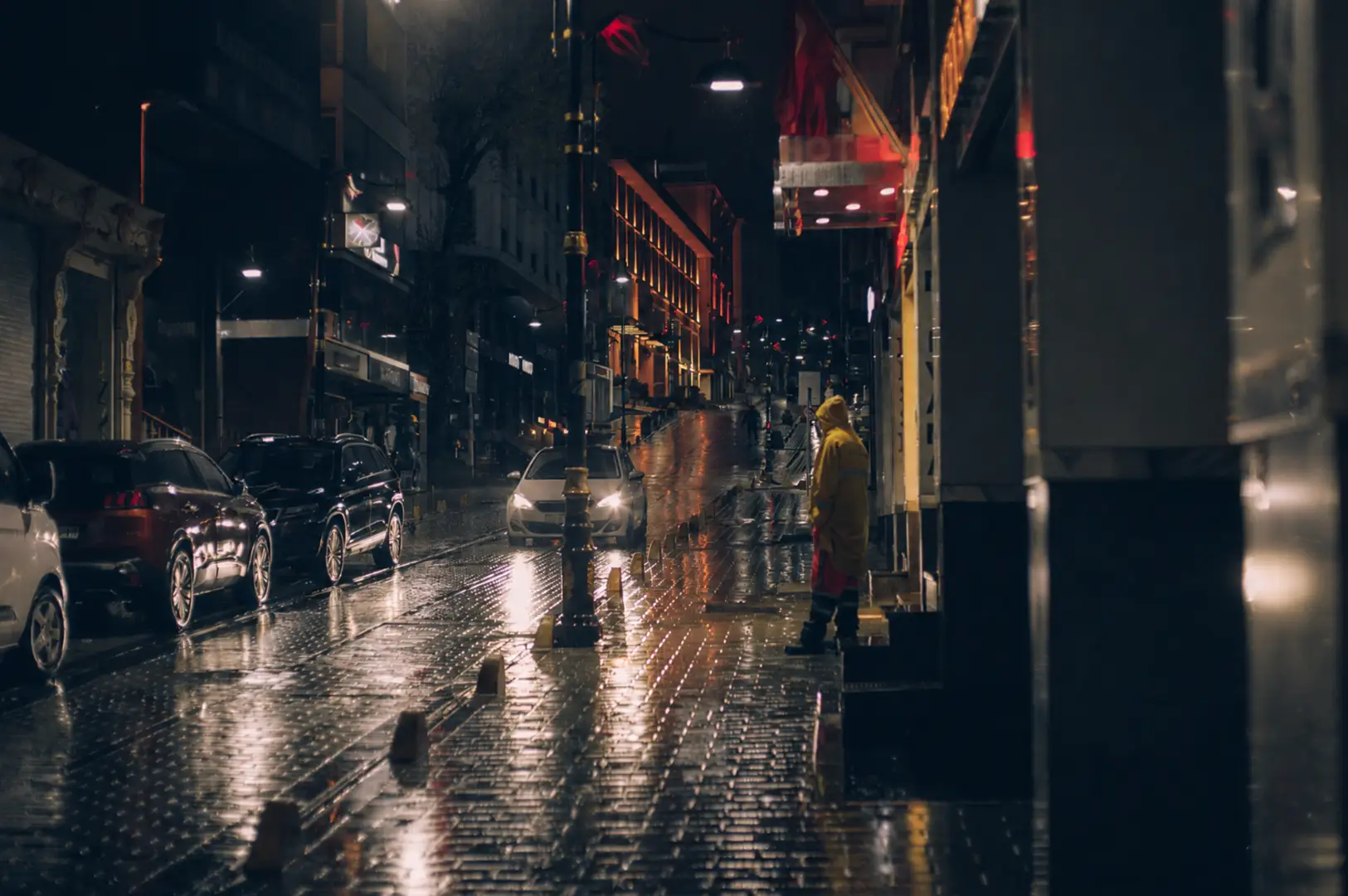
There are photographs I remember more clearly for the minutes before them than for the fraction of a second when I pressed the shutter.
One evening, I stood beneath a sheltered walkway while rain worked its way across the estate. The concrete had darkened. Water gathered along the kerb. A fluorescent light inside a provision shop came on before the sky had properly dimmed.
Nothing was happening.
At least, nothing obvious.
A cyclist passed. Then nobody. A woman folded an umbrella and shook the water from it. Somewhere behind me, a metal gate closed with that familiar hollow clang.
I stayed.
Photography can make us impatient because the camera is built around an instant. We talk about decisive moments, shutter speeds, timing. We learn to react quickly.
But a great deal of photographing Singapore has taught me the opposite.
Sometimes the photograph only arrives after I stop chasing it.
Waiting changes the way I see a place. After five minutes, I notice where people naturally pause. After ten, I understand which part of the pavement catches the light. I begin to see the small patterns: office workers taking the same shortcut, aunties slowing near the fruit stall, delivery riders sheltering under the narrowest strip of awning.
The scene develops before the photograph does.
This is especially true in a city where so much movement appears routine. MRT exits empty, crossings fill, coffee is carried back to offices, tables turn over, shutters rise and fall. From a distance, it can look repetitive.
Stay long enough and repetition becomes variation.
A hand reaches differently. Someone hesitates. Two strangers briefly share an umbrella. The light shifts half a metre across a wall and suddenly the composition I had been waiting for feels complete.
There is technique in this, of course. I might choose my frame early, set the exposure, and wait for the right person to enter it. But the technical part is usually the easiest.
The harder part is resisting the urge to move on.
I think that patience has changed how I photograph food too. A bowl arriving at the table is not always the moment. Sometimes it is the steam thinning above it. The hand reaching for the spoon. The stain of sauce left on the plate halfway through.
The photograph is often hiding inside the waiting.
And perhaps that is what I have come to value most.
Exposure is not only about how long light reaches the sensor.
Sometimes it is about how long I am willing to remain with a place before asking it for a picture.