
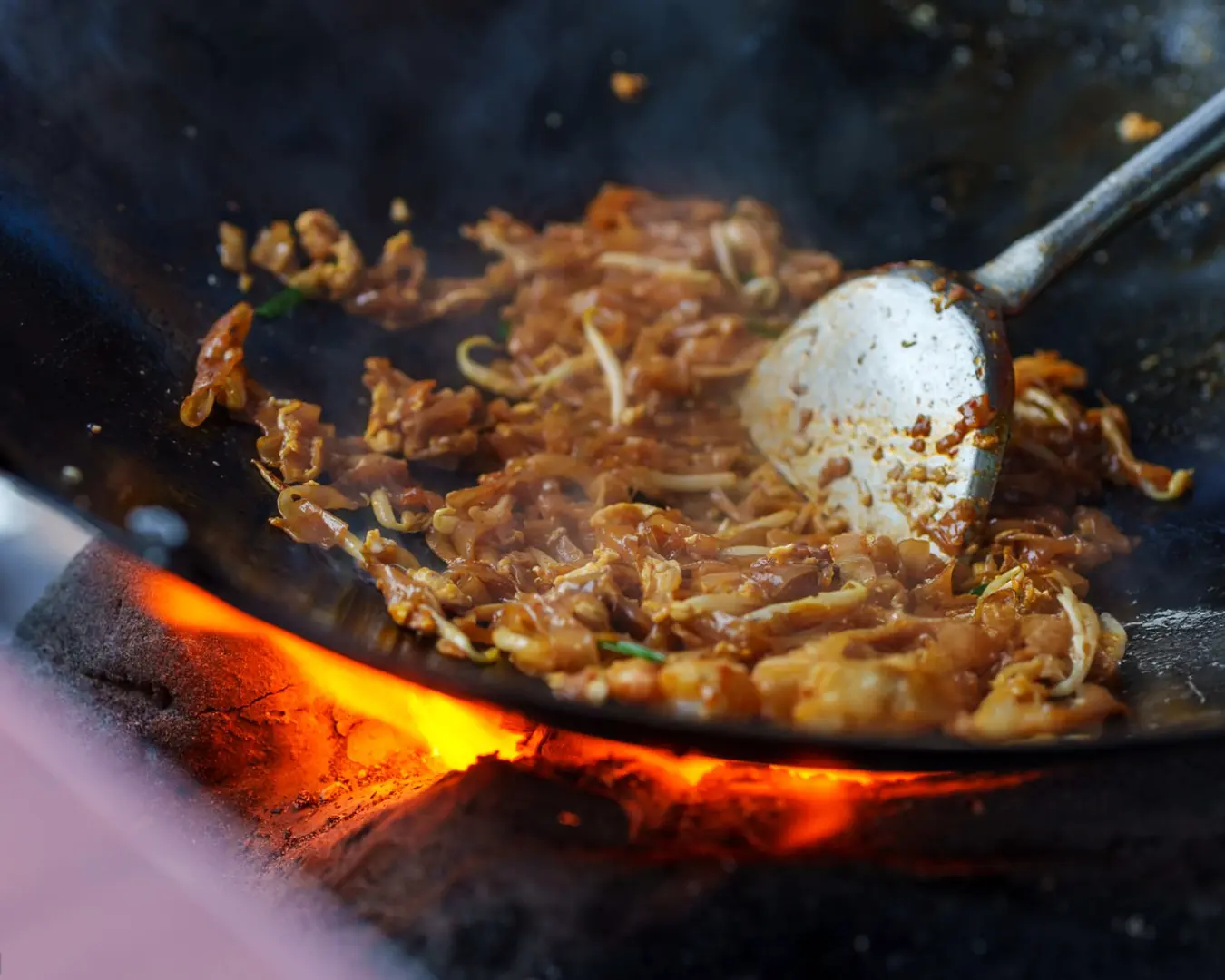
In Singapore, food is everywhere.
But the story isn’t on the plate.
It’s in the hands that prepare it—moving without hesitation, shaped by years of repetition. If you stand long enough in a hawker centre, you start to notice it. The way a ladle is held. The rhythm of a knife against the board. The quiet choreography behind every dish that leaves the stall.
These are the moments I find myself drawn to.
Not the final bowl of noodles or the perfectly plated rice, but everything that comes before it. The gestures that don’t pause for attention. The small decisions made without thinking. This is where the real story lives.
Photographing hawkers isn’t just about food, it’s about proximity.
You’re stepping into a space that is both public and deeply personal. A stall may look open, but the act of cooking is intimate. It carries memory, pressure, routine. And when you raise a camera, you interrupt that flow, even if only slightly.
Sometimes, you feel that interruption immediately.
A glance up. A brief pause in motion. Nothing confrontational, just awareness. And in that second, the image shifts. What could have been an honest moment becomes something else. Something observed.
That’s the quiet tension of photographing in these spaces.
You learn to wait. To stand at the edge of the scene, not inside it. To let the rhythm return before you even think about pressing the shutter. Because the goal isn’t to take something but to be allowed to witness it.
And when it works, it doesn’t feel like a photograph anymore.
It feels like a fragment of something ongoing.
Steam rising from a pot, catching the morning light. Oil cracking softly as ingredients hit the pan. A hand reaching instinctively for seasoning, never measuring, always knowing. These are not dramatic moments. They won’t demand attention. But they carry weight, the kind that only comes from doing the same thing, day after day, for years.
That’s what makes hawker photography different.
You’re not capturing food. You’re capturing continuity.
In a city that moves quickly, these stalls remain steady. Recipes are repeated, techniques preserved, movements passed down or learned through time. And in every frame, if you’re patient enough, you begin to see that history—not as something distant, but as something alive.
So when you photograph a hawker, you’re not just framing a subject.
You’re framing a story that was already in motion long before you arrived.
And long after you leave, it will continue—unseen, uninterrupted, and just as meaningful.